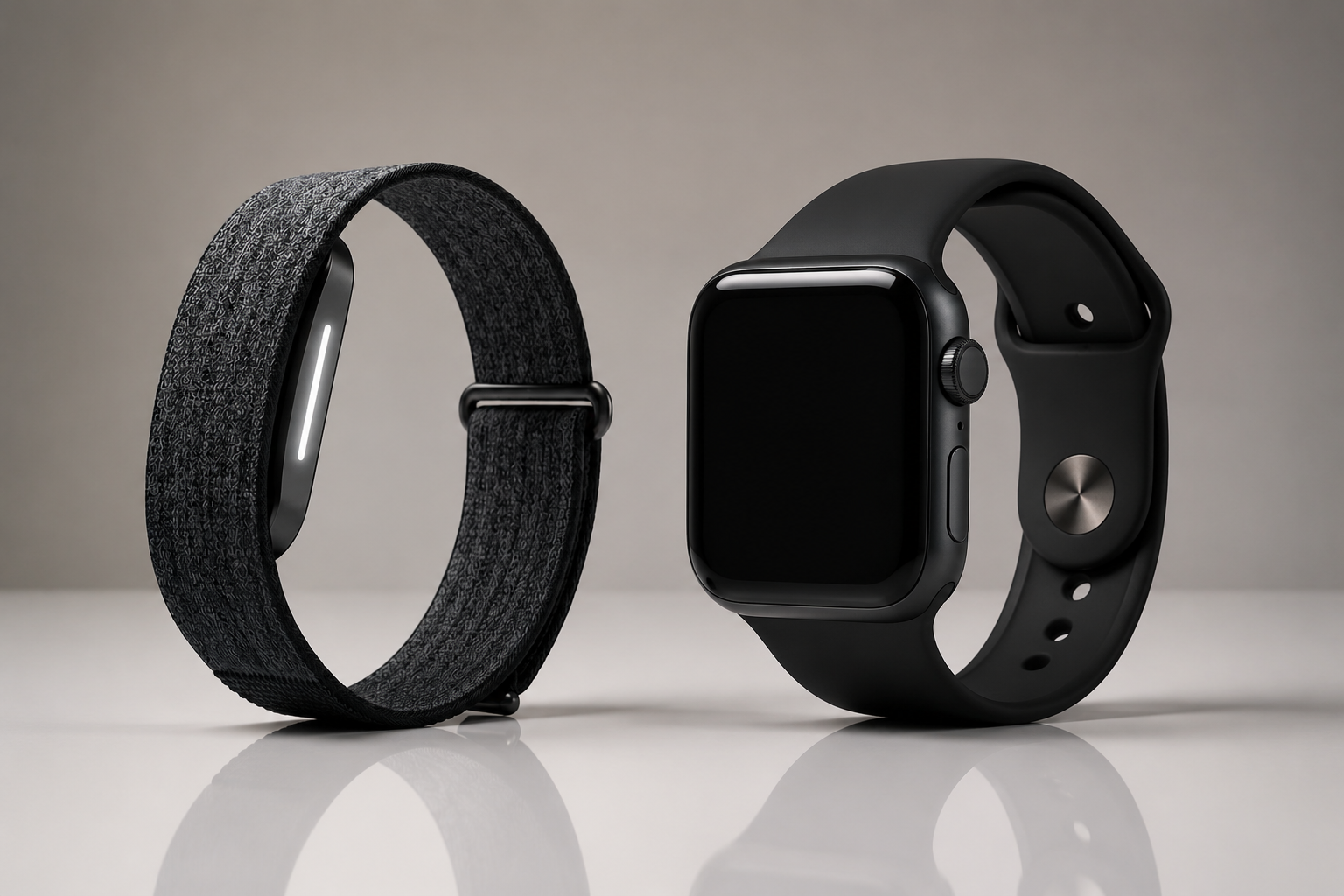
Hume Band vs Apple Watch (2026 Comparison)
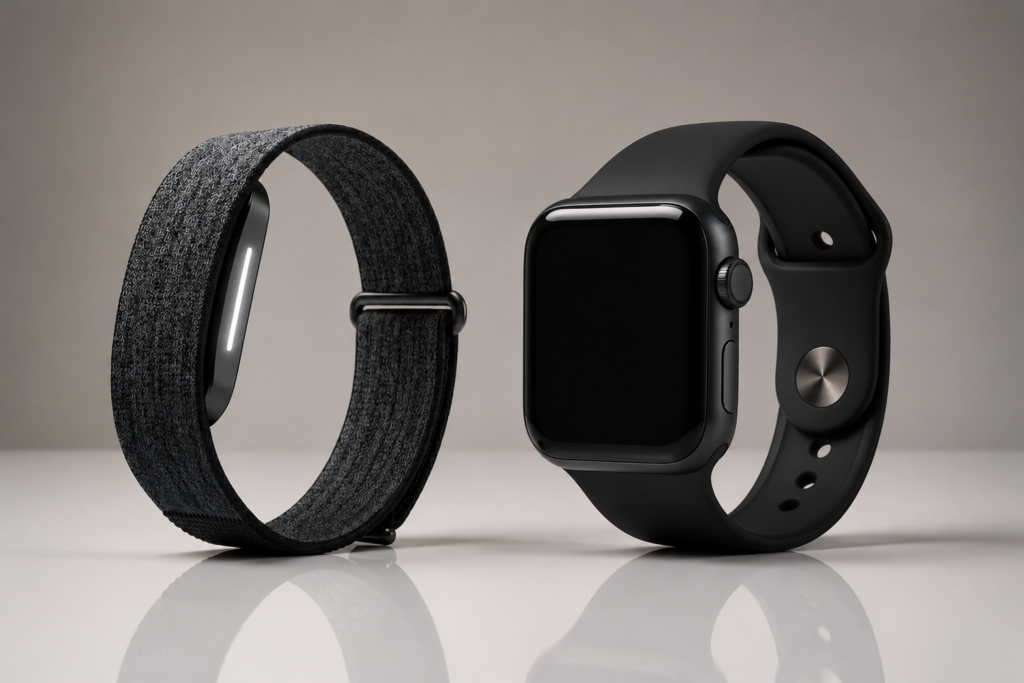
Hume Band vs Apple Watch? The main difference between the Hume Band and the Apple Watch is user intent: the Apple Watch is a high-interactivity smartwatch designed for notifications, apps, and real-time fitness metrics starting at $399. The Hume Band, retailing for a flat $249, is a screenless, passive longevity tracker designed to sit silently on your wrist while mapping metabolic capacity, biological age, and cellular health trends.
Specification Showdown: Screenless Biohacking vs. Smart Watch
| Feature | Hume Band | Apple Watch (Series 11 / Ultra) |
| Starting Price | $249 upfront | $399 (Standard) / $799 (Ultra) |
| Display | None (Screenless) | Always-On OLED Touchscreen |
| Battery Life | 6.8 Days | 18 to 36 Hours (Requires daily charging) |
| Primary Focus | Metabolic Momentum & Longevitiy | Connectivity, Apps, and Daily Fitness |
| Step Tracking | Yes (Continuous) | Yes (Continuous) |
| Waterproof Rating | IP68 (Shallow water friendly) | WR50 / WR100 (Swim & Dive proof) |
Digital Distraction vs. Invisible Tracking
The design philosophies here are polar opposites.
- The Apple Watch wants your attention. It vibrates for emails, tracks workouts with flashing screens, and forces you into a daily charging routine.
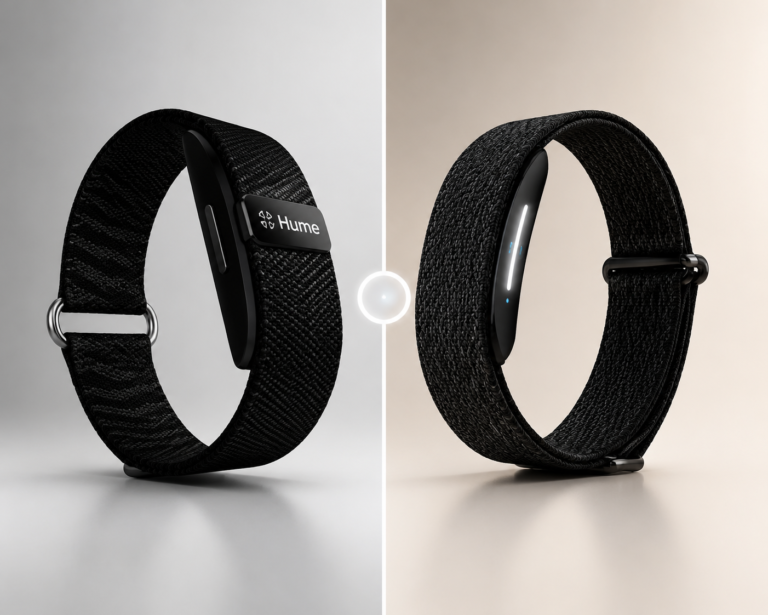
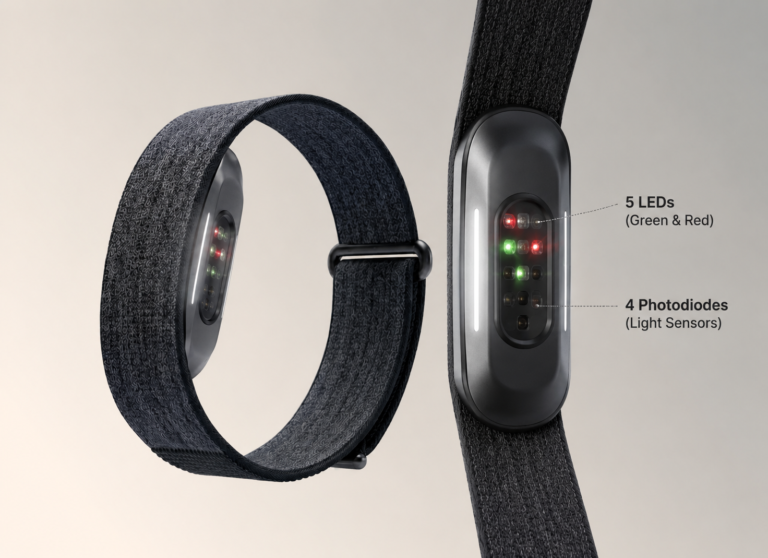
- The Hume Band is completely invisible. With no screen, it acts as a silent bio-sensor. It is highly favored by users who suffer from notification anxiety or want a distraction-free sleep tracker. Because of its lightweight profile, you can easily pair it with comfortable hume band replacement straps made of fabric or elastic nylon, allowing you to wear it all week without even noticing it is there.
Data Architecture: Closing Rings vs. Reversing Age
While both devices are highly advanced, they interpret your health data differently:
- The Apple Watch System: Focuess on the short term. It wants you to close your daily Activity Rings (Move, Exercise, Stand). It is an incredible tool for tracking precise workouts, running paces, and gym sessions.
- The Hume Health System: Focuses on the macro-horizon of aging. While the hume band tracks steps and general movement to keep you active, it uses those metrics to calculate how your daily exertion directly influences your cellular Metabolic Capacity. It answers the ultimate long-term question: Is your lifestyle making your body biologically younger or older?

Battery Performance and Daily Practicality
This is where the user experience diverges drastically. Our tests showed that the hume band charger only needs to be taken out of the drawer once every 6 to 7 days, taking just 90 minutes to fully fuel the device.
The Apple Watch, despite its brilliant screen, requires a strict daily charging ritual. If you forget to charge it before bed, you lose your sleep data entirely—a major downside for dedicated health trackers. Furthermore, while the Apple Watch boasts superior ocean waterproofing, the Hume Band’s certification proves that is hume band waterproof enough to survive all standard showers and pool workouts seamlessly.
Verdict: Which One Belongs on Your Wrist?
- Go with the Hume Band if: You want a silent, screenless health companion that focuses deeply on longevity and metabolic biohacking, possesses a week-long battery life, and frees you from a smartwatch ecosystem.
- Go with the Apple Watch if: You want a full-featured smartwatch that handles wrist-based calls, text notifications, and offers deep, interactive tracking features for specific athletic workouts.
FAQ: Hume Band vs Apple Watch
1. What is the main difference between the Hume Band and the Apple Watch?
The main difference is their design and health philosophy: the Apple Watch is an interactive smartwatch with an OLED screen for notifications and apps, while the Hume Band is a screenless, passive tracker focused entirely on metabolic longevity. The Apple Watch requires daily charging and pushes constant alerts, whereas the Hume Band sits silently on your wrist, has a week-long battery life, and analyzes biomarcadores to map your biological age and metabolic capacity.
2. Does the Hume Band track steps as accurately as the Apple Watch?
Yes, the Hume Band tracks steps with elite accuracy, matching standalone smartwatches like the Apple Watch within a tight 1.8% variance margin. While the Apple Watch displays your movement via its Activity Rings system, the Hume Health ecosystem feeds your daily steps directly into its Metabolic Momentum score to calculate how physical exertion helps lower your biological age.
3. How often do you need to charge the Hume Band compared to the Apple Watch?
The Hume Band only needs to be charged once every 6 to 7 days, whereas the Apple Watch requires a strict daily charging ritual due to its 18-to-36-hour battery life. Because the Hume Band doesn’t feature a battery-draining display, its internal sensor module can collect continuous, uninterrupted sleep and biometric data all week long with just a single 90-minute charge on the Hume Band charger.
4. Is the Hume Band waterproof enough to compete with the Apple Watch?
Yes, the Hume Band holds an official IP68 rating, making it fully waterproof for heavy sweat, hot showers, rain, and shallow pool swimming. However, the Apple Watch holds higher WR50/WR100 certifications, meaning it is better suited for high-velocity water sports and deep ocean diving, whereas the Hume Band is optimized strictly for everyday lifestyle water exposure.
5. Can I use different straps on the Hume Band like I can on the Apple Watch?
Yes, the Hume Band supports third-party accessories, allowing you to easily swap the default silicone strap for aftermarket Hume Band replacement straps. While the default band is great for durability, switching to a breathable woven nylon or fabric strap is highly recommended to manage sweat and prevent skin irritation during 24/7 wear and sleep tracking.