Hume Body Pod vs Withings Body Scan (2026): Which Should You Buy?
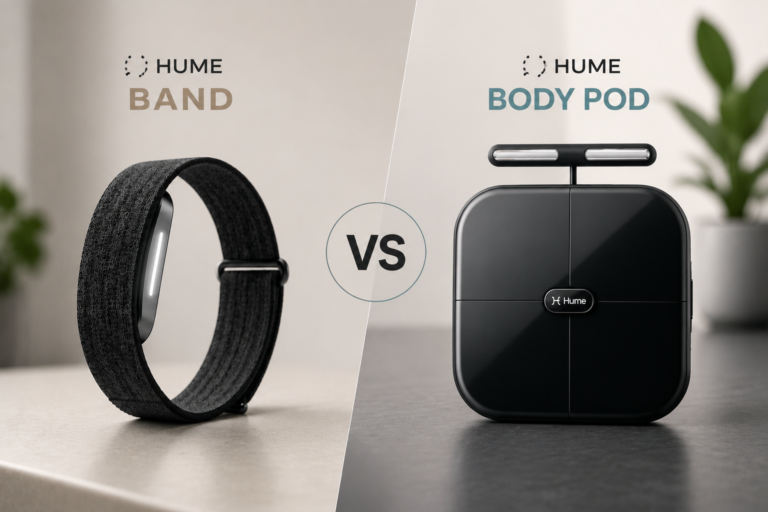
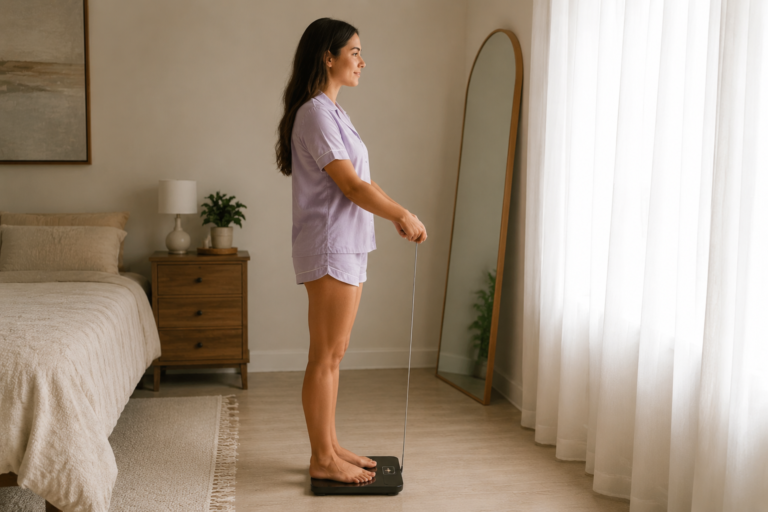
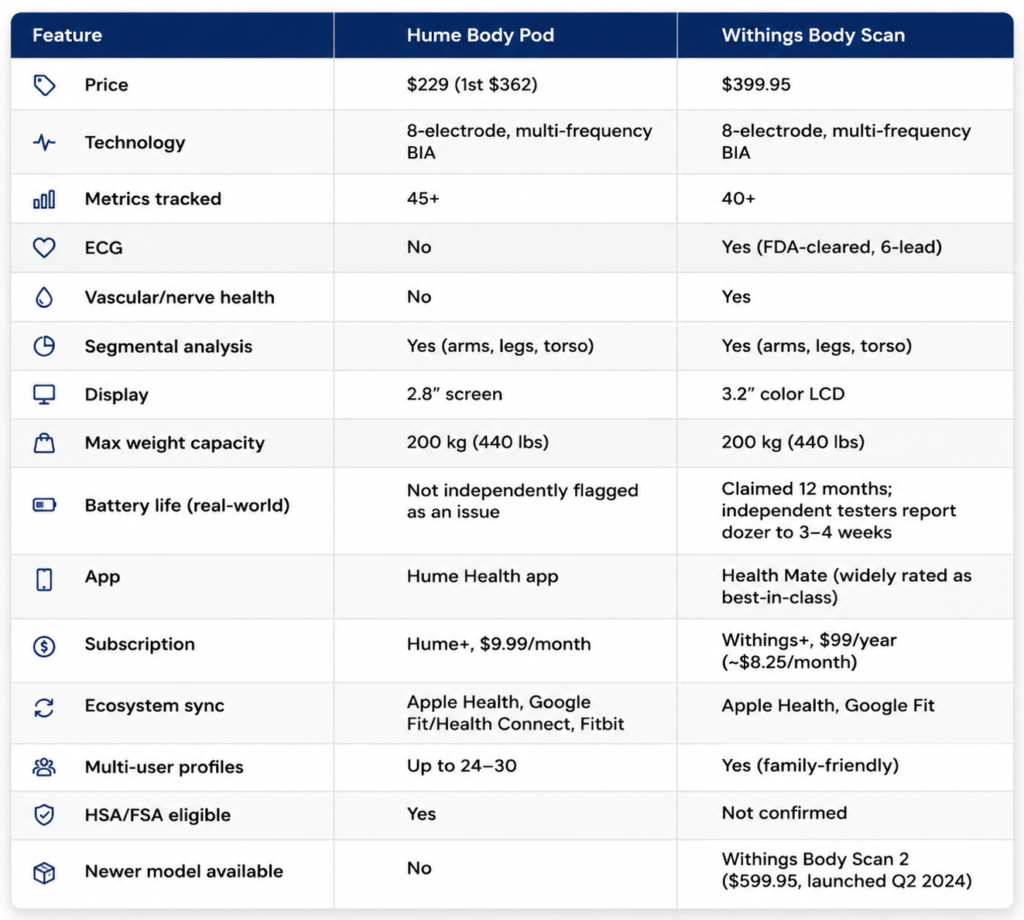
The Hume Body Pod ($229) and Withings Body Scan ($399.95) are both 8-electrode body composition scales, but they’re built for different goals. The Body Pod is the better pick if body recomposition (tracking fat loss and muscle gain) is your main priority — it’s $170 cheaper and has a lower-cost optional subscription. The Body Scan is the better pick if you want a broader “home health station” that also includes an FDA-cleared ECG, vascular age, and nerve health scoring — but you’re paying a real premium for those extra features, and independent testing has flagged accuracy concerns for leaner users on both devices.
Hume Body Pod vs Withings Body Scan: Spec Comparison
Where the Hume Body Pod Wins
Price. At $229 versus $399.95, the Body Pod is $170 cheaper for a device that covers the same core job most buyers actually want: tracking body fat, muscle mass, and water over time. If your goal is body recomposition, not a full cardiovascular checkup, you’re not missing much by skipping the Body Scan’s extra sensors.
Lower-cost subscription. Hume+ runs $9.99/month (about $120/year) for AI coaching. Withings+ costs $99/year for its full feature set — close in annual cost, but Hume’s month-to-month option is more flexible if you just want it for a few months during a specific training block.
Simpler value proposition. Independent reviewers of the Body Scan have repeatedly noted that most people don’t need or use its ECG, vascular age, or nerve health features day to day — several called it “overkill” for anyone who just wants body composition tracking. The Body Pod skips those extras and prices accordingly
Where the Withings Body Scan Wins
It’s genuinely a “home health station,” not just a scale. The Body Scan includes an FDA-cleared 6-lead ECG, vascular (arterial) age assessment, and nerve activity screening in the feet — features aimed at longer-term cardiovascular and nerve health monitoring, not just body composition. If you already track heart health or have a doctor’s recommendation to monitor it, this is a real, meaningful advantage the Body Pod simply doesn’t offer.
App quality. Withings’ Health Mate app is consistently rated among the best in the smart scale category — reviewers describe it as polished, insightful, and easy to navigate, with features like personalized “Missions” and pregnancy-specific tracking modes.
Brand maturity. Withings has been building connected health devices for over a decade, and the Body Scan is now on its second generation (Body Scan 2 launched in Q2 2026 at $599.95, adding even more cardiac and metabolic metrics). That’s a longer track record than Hume Health’s more recent entry into the space.
Accuracy: How Do They Actually Compare?
Neither device is a substitute for a DEXA scan, and independent testing on both has turned up similar caveats.
For the Body Pod, testing found whole-body fat percentage generally within about 2 percentage points of DEXA, with segmental (limb) readings the weaker point — off by as much as 37% in some cases.
For the Body Scan, testing against a professional-grade body composition machine found it overestimated body fat by roughly 2% and lean muscle by about 3%, while underestimating body water by around 3% — notably, testers found this made it slightly more accurate than comparable hand-to-feet models from other brands. However, multiple independent reviewers separately flagged that accuracy gets shakier specifically for lean and athletic users, where body fat tends to be overestimated more significantly.
Bottom line on accuracy: both devices are reasonably reliable for tracking trends over time in an average user, and both get less reliable the leaner or more athletic you are, or when you look at segmental (single-limb) numbers instead of whole-body figures. Neither should be treated as a medical-grade diagnostic tool.
Price Over Time: What You’re Really Paying
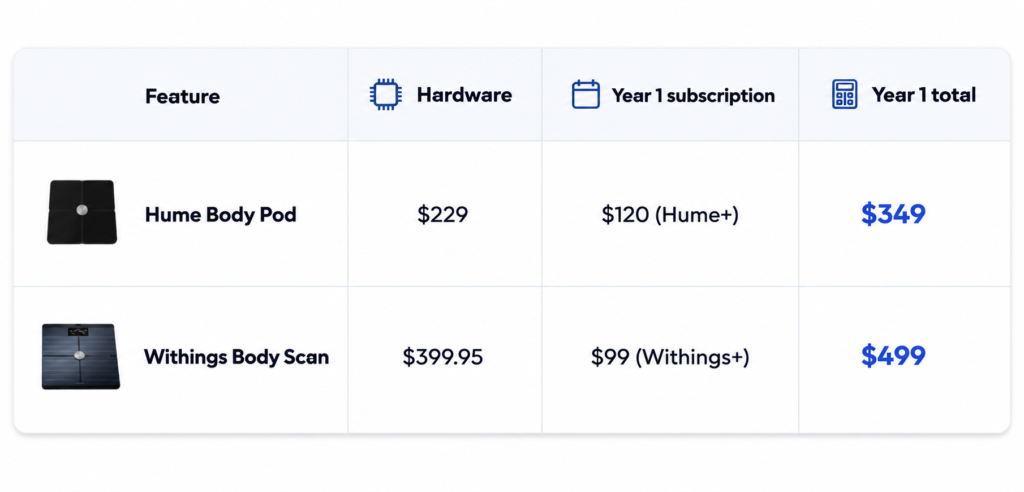
Even with a subscription on both, the Body Pod comes out about $150 cheaper in year one — and after year one, the Body Pod’s optional subscription can be cancelled or paused month-to-month, while Withings+ is billed annually.
Who Should Buy the Hume Body Pod
- You’re focused on body recomposition (fat loss, muscle gain) and want clean trend data without paying for features you won’t use
- You want the lower up-front cost and more flexible subscription
- You want HSA/FSA eligibility
- You already use Apple Health, Google Fit, or Fitbit and want simple auto-sync
Who Should Buy the Withings Body Scan
- You want cardiovascular monitoring (ECG, vascular age) alongside body composition, not just body composition alone
- You’ve been advised by a doctor to monitor heart or nerve health at home
- You want the most polished app experience in the category and don’t mind paying for it
- You’re pregnant and want a device with a dedicated pregnancy tracking mode
💡 Build the Complete Longevity Ecosystem
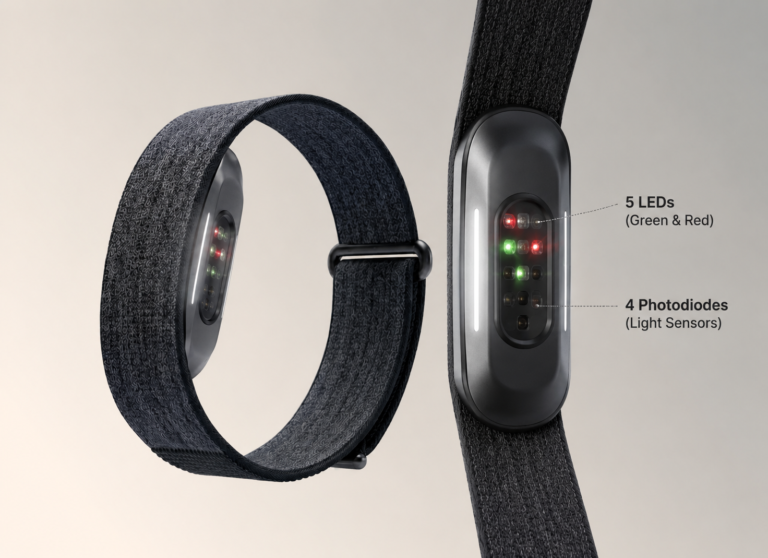
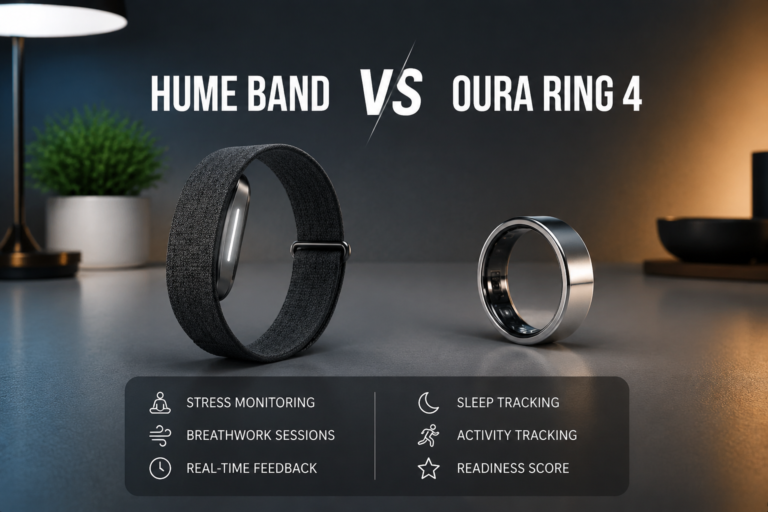
Looking to track more than just your body fat trends? Pair your smart scale with the screenless tracker to get complete daily recovery, heart rate, and Biological Age data.
➡️ Read our full [Hume Body Pod Review]
➡️ Read our hands-on [Hume Band Review]
Frequently Asked Questions
Is the Hume Body Pod as accurate as the Withings Body Scan?
Both use similar 8-electrode BIA technology and show similar overall accuracy patterns: solid for whole-body fat percentage trend tracking, less reliable for segmental (single-limb) readings, and less accurate for very lean or athletic users. Independent testing hasn’t shown a clear accuracy winner between the two.
Which is cheaper, the Hume Body Pod or Withings Body Scan?
The Hume Body Pod is cheaper. It’s priced at $229 versus $399.95 for the Withings Body Scan — a $170.95 difference before subscriptions.
Does the Hume Body Pod have an ECG like the Withings Body Scan?
No. The Withings Body Scan includes an FDA-cleared 6-lead ECG and vascular age assessment. The Hume Body Pod does not include ECG or cardiovascular monitoring features.
Is the Withings Body Scan worth the extra $170?
Only if you’ll actually use the ECG, vascular age, or nerve health features. If body composition tracking is your only goal, most of that price premium goes toward features you likely won’t use regularly.
Can I use either scale with Apple Health or Google Fit?
Yes. Both the Hume Body Pod and Withings Body Scan sync with Apple Health and Google Fit. The Body Pod also syncs with Fitbit.
Is there a newer version of either scale?
Yes, the Withings Body Scan 2 launched in Q2 2026 at $599.95, adding additional cardiac and metabolic metrics. The original Body Scan (reviewed here) remains available at $399.95. Hume Health has not announced a second-generation Body Pod as of this writing.
Our Verdict
For most people focused on fitness and body recomposition: the Hume Body Pod. It covers the metrics that matter most for tracking fat loss and muscle gain, costs significantly less, and its optional subscription is more flexible.
For people who want a broader home health device that also tracks cardiovascular and nerve health: the Withings Body Scan. You’re paying a real premium, but you’re also getting real additional functionality, not just a bigger price tag.