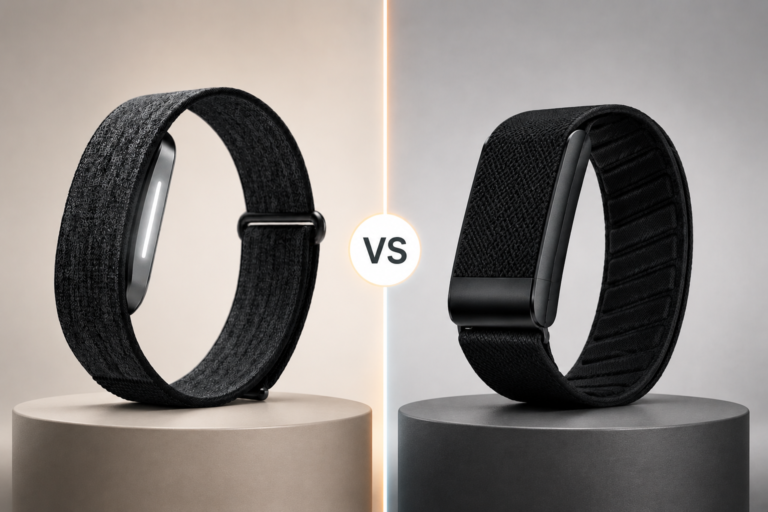
Hume Band vs Fitbit: Which Wearable Is Right for You in 2026?
Fitbit has changed significantly in 2026. The brand is transitioning from its original app to Google Health, and it just launched the Fitbit Air — a screenless, no-subscription-required tracker that’s a much closer match to the Hume Band than Fitbit’s traditional smartwatch lineup. Here’s how the two actually compare, including where Fitbit’s newest device changes the picture.
📖 Comparing more options? See our Hume Band vs Oura Ring 4 and Hume Band vs Garmin comparisons, or check the full Hume Band review.
Quick Comparison
| Feature | Hume Band | Fitbit Air (2026) | Fitbit smartwatches (Versa/Sense/Charge) |
|---|---|---|---|
| Form factor | Screen-free wrist band | Screen-free clip/band | Screen-based smartwatch |
| Upfront price | ~$250–295 | $99.99 (Special Edition: $129.99) | Varies, typically $150–$350 |
| Subscription | Optional (~$9/mo); core features free | Optional Google Health Premium (~$9.99/mo); core features free | Same — optional Google Health Premium |
| Battery life | Up to 14 days | Up to 7 days | Varies by model, typically days |
| Core focus | Longevity, metabolic health, biological age | Everyday health tracking, HRV, Afib alerts | General fitness, activity, notifications |
| Ecosystem | Hume Health app | Google Health app (new in 2026) | Google Health app |
The Real Comparison: Hume Band vs. Fitbit Air
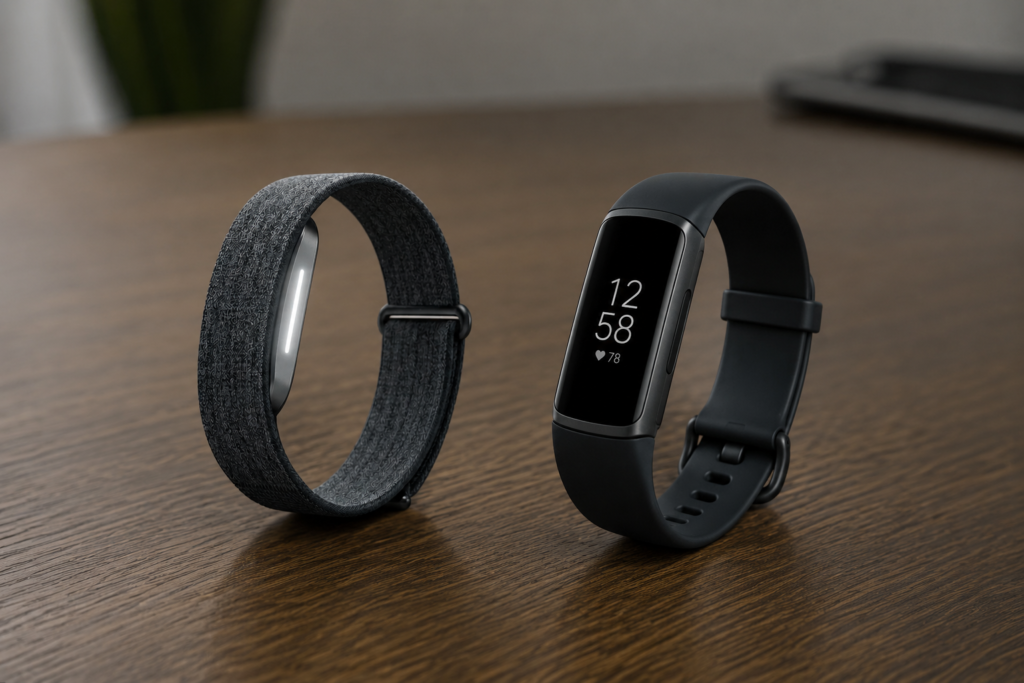
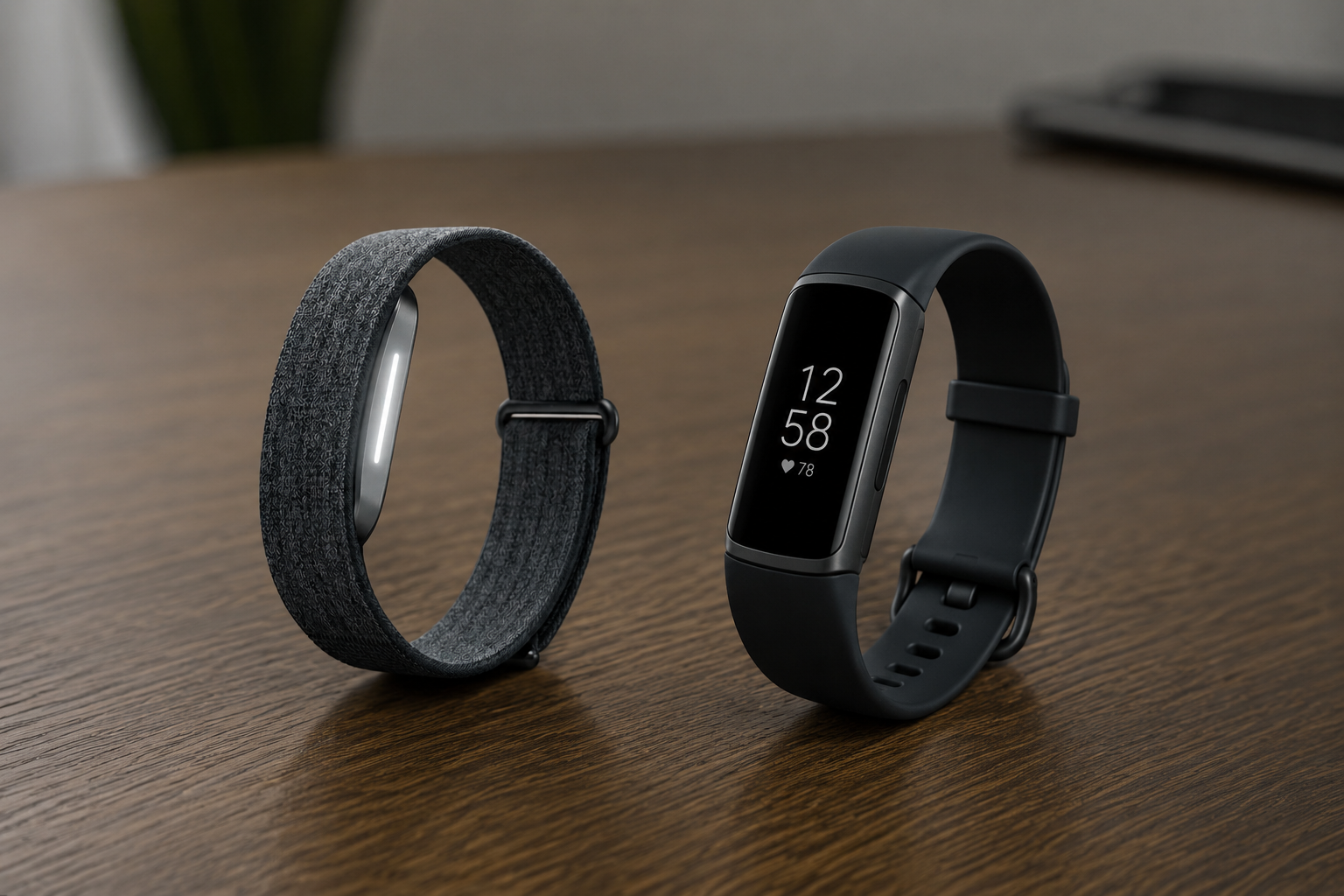
Fitbit’s traditional smartwatches (Versa, Sense, Charge) are built more like general-purpose fitness trackers with screens — a meaningfully different product than the Hume Band. The more relevant comparison is against the Fitbit Air, launched in May 2026 as Google’s direct answer to screenless wearables like Whoop, Oura, and the Hume Band.
The Fitbit Air tracks 24/7 heart rate, SpO2, sleep stages, HRV, and includes Afib rhythm alerts, all without requiring a subscription for core features — much like the Hume Band’s approach. At $99.99, it undercuts the Hume Band significantly on upfront price, though the two devices differ in focus: the Fitbit Air leans toward broad everyday health monitoring, while the Hume Band is built specifically around longevity metrics like Metabolic Momentum and biological age.
Subscription Model: Both Now Optional
Fitbit is in the middle of a broader shift — Fitbit Premium is being rebranded as Google Health Premium, priced at $9.99/month or $99.99/year (up from Fitbit Premium’s previous $79.99/year). The free tier remains fairly complete, covering heart rate, sleep stages, a Daily Readiness Score, health trends, and activity tracking without payment. Premium adds AI coaching (via Gemini) and a guided workout library on top.
This mirrors the Hume Band’s structure closely: solid free core functionality, with an optional paid tier for AI coaching. Neither company currently requires a subscription just to use the device’s basic health tracking — a contrast to Whoop’s mandatory model and Oura’s largely-paywalled free tier.
Price-to-Value Over Time
This is where Fitbit — specifically the Fitbit Air — has a clear edge if budget is the primary concern. At $99.99 with no required subscription, it’s meaningfully cheaper upfront than the Hume Band, and industry analysis has estimated a Fitbit Air plus Premium subscription can save several hundred dollars over five years compared to fully subscription-based competitors like Whoop.
The trade-off is scope: the Hume Band’s proprietary longevity metrics (Metabolic Momentum, Metabolic Capacity, biological age estimates) aren’t something the Fitbit ecosystem currently offers in the same form. If those specific longevity-framed insights are the reason you’re shopping in this category, the Fitbit Air’s lower price doesn’t necessarily replace that functionality — it’s a different value proposition, not a strictly cheaper version of the same thing.
Battery Life and Design
The Hume Band’s up to 14-day battery life is longer than the Fitbit Air’s roughly 7 days, though the Air includes fast charging that can restore a full day of use in about 5 minutes. Both are screen-free and designed for continuous, low-friction wear, unlike Fitbit’s traditional watch-style models which require more frequent charging due to their displays.
Who Each Device Fits Best
Choose the Hume Band if:
- Longevity-specific metrics like biological age and Metabolic Momentum are your primary interest
- You want the longest possible battery life in a screen-free design
- Budget is secondary to the specific proprietary insights offered
Choose the Fitbit Air if:
- You want a screen-free, no-subscription-required tracker at a significantly lower price point
- Afib alerts and general everyday health monitoring matter more than longevity-specific scoring
- You’re already in, or open to, the Google ecosystem
Choose a traditional Fitbit smartwatch if:
- You want a display, notifications, and general fitness tracking in one device
- Longevity-specific metrics aren’t a priority
The Verdict
Fitbit’s 2026 lineup, especially the new Fitbit Air, is a meaningfully closer competitor to the Hume Band than Fitbit’s older smartwatch models — both are screen-free, both work without a required subscription, and both are riding the same shift away from mandatory-subscription wearables. The deciding factor mostly comes down to price versus specificity: the Fitbit Air costs a fraction of the Hume Band’s price for broad everyday health tracking, while the Hume Band charges more for its specific longevity-and-metabolic-health framing that the Fitbit ecosystem doesn’t directly replicate.
Frequently Asked Questions
Is the Hume Band better than Fitbit? It depends on what you’re comparing. Fitbit’s newest device, the Fitbit Air, offers screen-free everyday health tracking at a much lower price. The Hume Band costs more but focuses specifically on longevity metrics like biological age and Metabolic Momentum that Fitbit doesn’t offer in the same form.
Do you need a subscription for Fitbit? No. Core features — heart rate, sleep stages, Daily Readiness Score, and activity tracking — are free. An optional Google Health Premium subscription ($9.99/month or $99.99/year) adds AI coaching and guided workouts.
What is the Fitbit Air, and how is it different from other Fitbits? The Fitbit Air is Google’s new screenless health tracker, launched in May 2026 at $99.99. Unlike Fitbit’s traditional smartwatches, it has no display and is positioned as a direct, budget-friendly alternative to screen-free wearables like Whoop, Oura, and the Hume Band.
Which is cheaper, Hume Band or Fitbit? Fitbit, particularly the Fitbit Air at $99.99, is significantly cheaper upfront than the Hume Band (roughly $250–295). Both have optional paid subscriptions in a similar price range for AI coaching features.
Does Fitbit track biological age like the Hume Band? No. Biological age and Metabolic Momentum are proprietary Hume Health metrics. Fitbit’s tracking (via Google Health) focuses on more conventional metrics like Daily Readiness Score, sleep stages, and Afib alerts rather than longevity-specific composite scores.
Which has better battery life, Hume Band or Fitbit Air? The Hume Band lasts up to 14 days per charge, compared to about 7 days for the Fitbit Air, though the Air supports fast charging that restores a full day of use in around 5 minutes.
This article is for informational purposes only and does not constitute medical advice. Always consult a healthcare provider regarding any health concerns.