Hume Band 2.0 vs Whoop 5.0 (2026): Which Longevity Tracker is Worth It?
If you’re choosing between a Hume Band and a Whoop, you’re really choosing between two different philosophies of health tracking. One is built for people chasing performance. The other is built for people chasing longevity. Here’s how they actually compare in 2026.
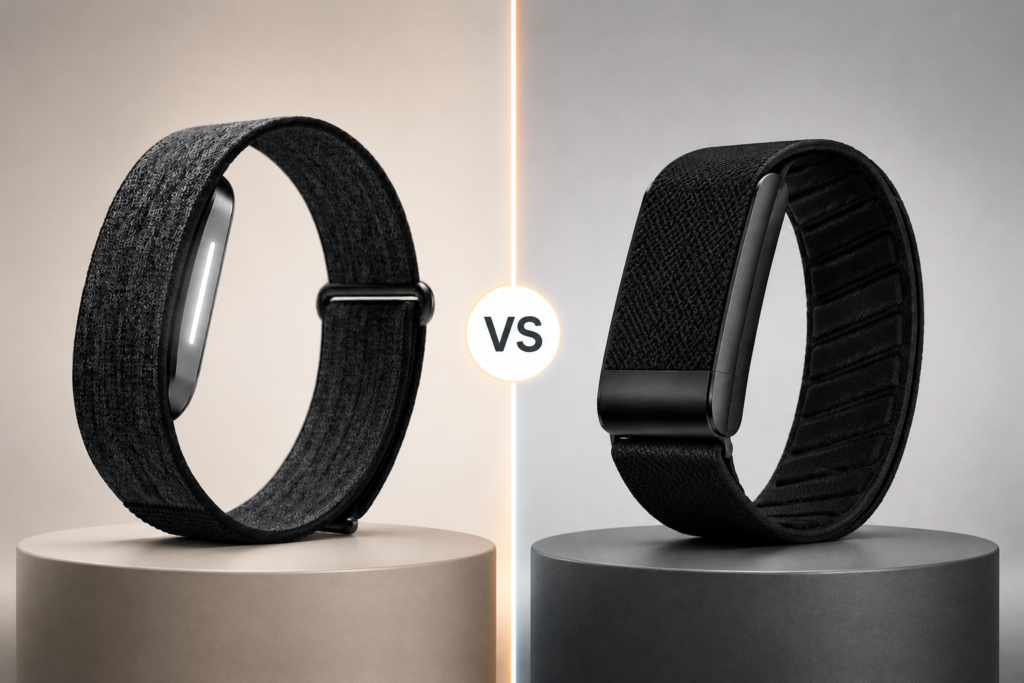
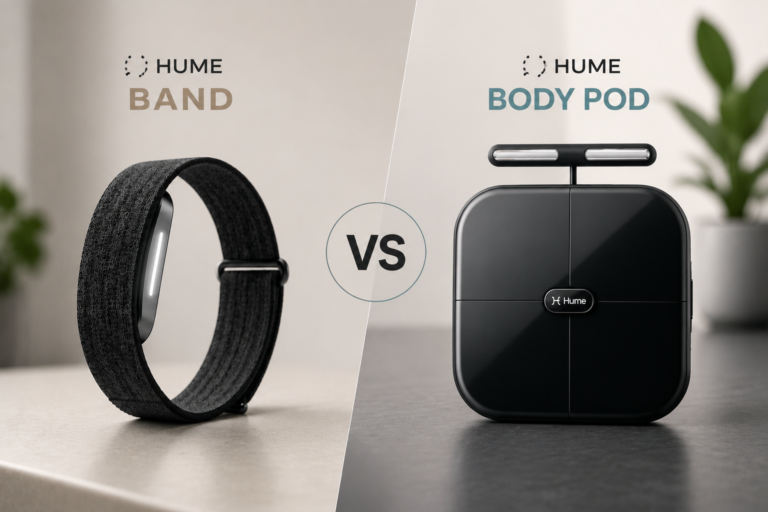
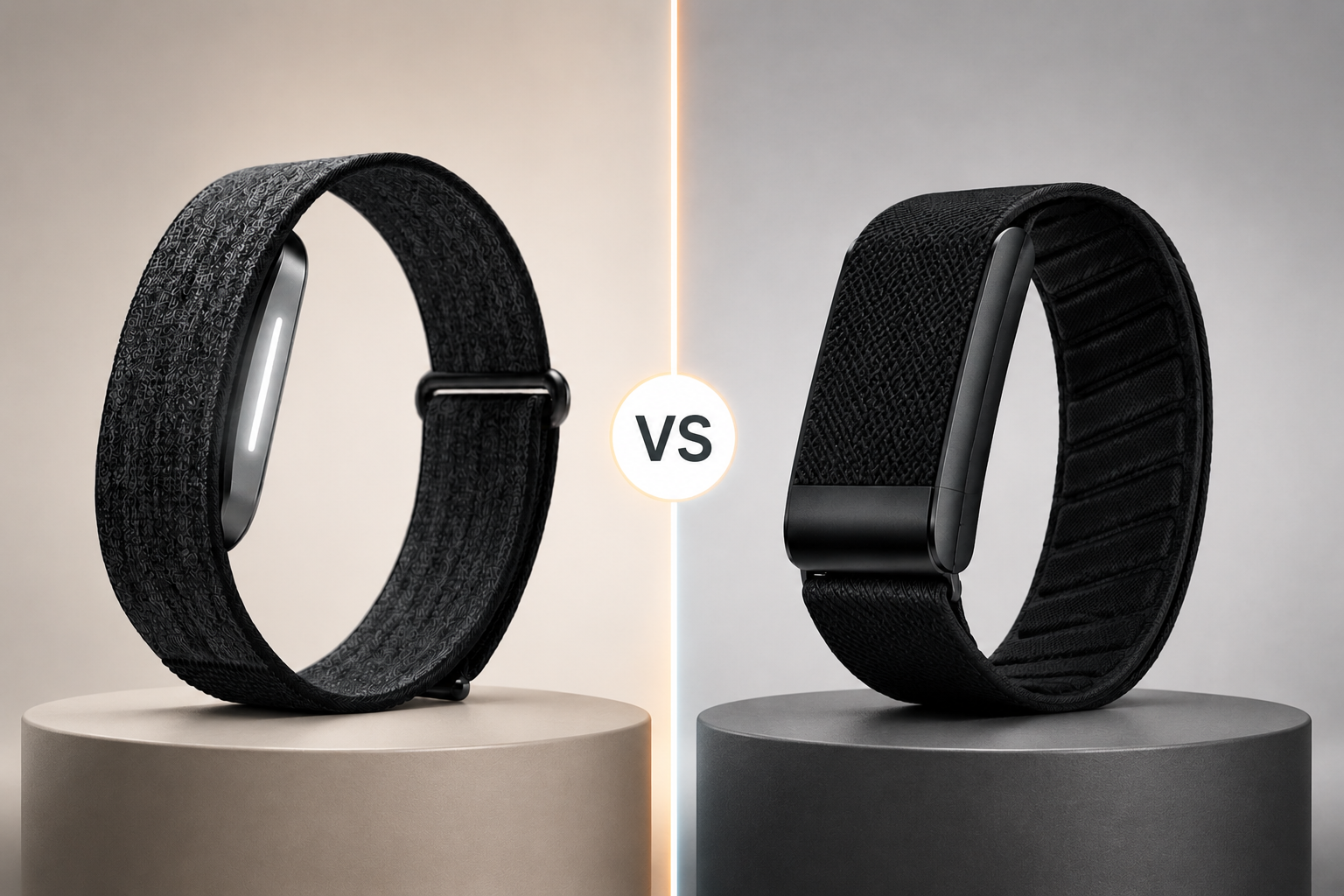
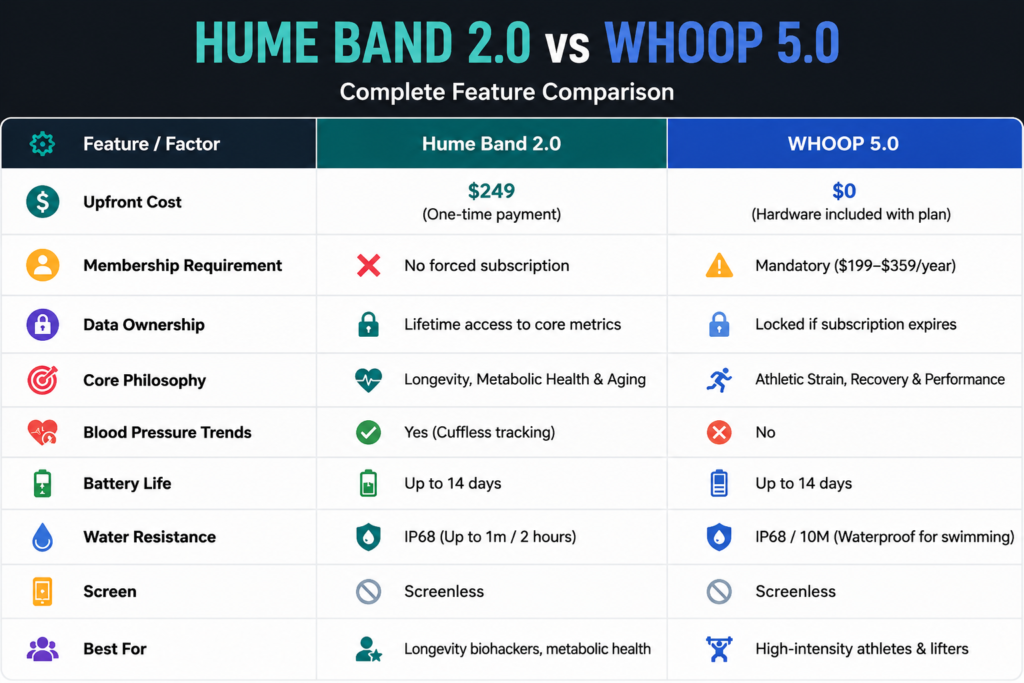
The main difference between the Hume Band 2.0 and Whoop 5.0 comes down to focus. Whoop is built for athletic strain, cardiovascular load, and daily recovery scores — it’s a training partner. The Hume Band is designed for metabolic health and biological longevity tracking — it’s more of a health dashboard for the long game. Whoop requires a mandatory ongoing subscription, with plans running roughly $20 to $30 a month billed annually. The Hume Band costs $356 at list price, though it’s frequently discounted to around $204–267, with an optional $8.99/month premium tier for deeper AI insights. Battery life, once a clear point of separation between the two, is now a near tie — both last roughly two weeks per charge.
Quick Comparison: Specifications & Features
Pricing & Data Access: Do You Want to Own Your Data or Rent It?
When choosing between the Hume Band 2.0 and WHOOP 5.0, the biggest long-term difference isn’t just on your wrist—it’s in how each company handles your personal biological data.
With the Hume Band 2.0, your $249 upfront purchase buys you hardware that you actually own. Even if you choose not to subscribe to their optional monthly AI coaching reports, your core baseline metrics, continuous health logs, and historical data remain 100% accessible in the app forever. Your data belongs to you, plain and simple.
WHOOP, on the other hand, operates on a strict subscription model. If your annual membership ($199–$359/year) expires or you cancel your plan, WHOOP locks the app entirely. The sensor becomes virtually useless—a high-tech paperweight—and your access to past strain, recovery, and sleep trends gets cut off until you pay again.
The Bottom Line: If you want continuous longevity tracking without being tied to a perpetual monthly fee, the Hume Band offers true data ownership, whereas WHOOP requires you to constantly rent access to your own body metrics.
Hardware Design, Wearability, and Straps
The Whoop 5.0 is noticeably smaller and lighter than its predecessor, and the softer SuperKnit bands make it easy to forget you’re wearing it. One of its biggest practical advantages is placement flexibility — you can wear it on your wrist, your bicep, your ankle, or tucked into Whoop apparel with a built-in pocket. That matters if you’re an athlete who doesn’t want a band interfering with wrist mobility during lifts or swings.
The Hume Band 2.0 takes the opposite approach: one form factor, worn on the wrist, built for passive 24/7 monitoring. The updated UltraLux strap is a step up from the original band’s material, and most people find it comfortable enough to forget about — which is really the point of a screenless device. If you’re deciding between the two on pure wearability, it comes down to whether you want flexibility of placement (Whoop) or a simpler, set-it-and-forget-it wrist band (Hume).

One practical note: if your Hume Band strap wears out, it’s worth ordering a replacement directly through Hume Health rather than a third-party strap, since fit and sensor contact matter for accuracy.
Metabolic Health vs. Athletic Strain: The Data Showdown
How Hume Tracks Longevity
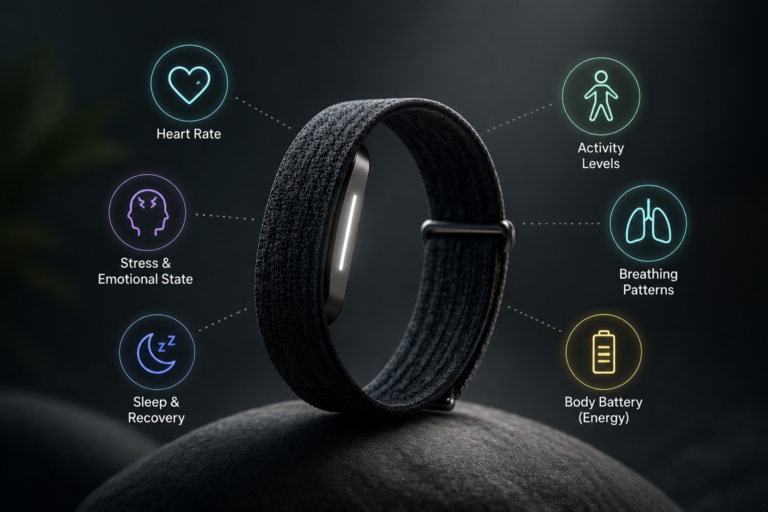
The Hume Band 2.0 centers on two proprietary scores: Metabolic Momentum and Metabolic Capacity. Instead of asking “how hard did you train today,” it asks “is your body trending toward better health or quietly draining over time.” The 2.0 model added blood pressure trend tracking, which used to be reserved for medical-grade devices, and it comes standard — no extra plan required.
Step tracking is also built into the Hume Health app, though the company hasn’t published specifics about a new step-counting algorithm for the 2.0 — the hardware upgrades focus mainly on HRV sensing, blood pressure, and overall signal accuracy rather than step precision specifically.
This is a device built around one question: are your daily habits adding years to your life, or taking them away?
How Whoop Tracks Performance
Whoop’s world revolves around three numbers: Strain, Recovery, and Sleep. Strain quantifies how much cardiovascular and muscular load you put your body through in a day. Recovery tells you, each morning, how ready your body is to handle more of it, based on HRV, resting heart rate, sleep quality, and respiratory rate. The 5.0’s sensors capture data 26 times per second, and Whoop claims close to 99% accuracy for heart rate tracking.
Step tracking arrived on Whoop more recently, rolled out through an app update rather than tied to new hardware — so even older devices got access to it. That said, it’s worth setting expectations: a number of users in Whoop’s own community forums have reported the step counter running noticeably high or low compared to other trackers. If step accuracy specifically matters to you, this is one area where Whoop is still working things out.
If your day revolves around training sessions, this is the system built to guide them.
Total Cost of Ownership: Hume Band Cost vs. Whoop Subscription
Since battery life no longer separates these two devices, cost becomes the sharpest point of contrast.
Whoop, year one: somewhere between $239 (Peak plan) and $359 (Life plan, which unlocks ECG and blood pressure features). You never actually own the hardware — cancel the subscription, and you lose access to your own data.
Hume Band 2.0, year one: $356 flat, or closer to $249 if you catch one of the recurring promotional discounts. Even without the optional Premium plan ($8.99/month), your core health metrics — including the newer blood pressure trends — stay unlocked in the app for good.
The math gets more lopsided from year two onward. A Hume Band owner who skips Premium pays nothing going forward. A Whoop member keeps paying, indefinitely, for as long as they want their data.
Durability and Water Resistance: Is the Hume Band Waterproof?
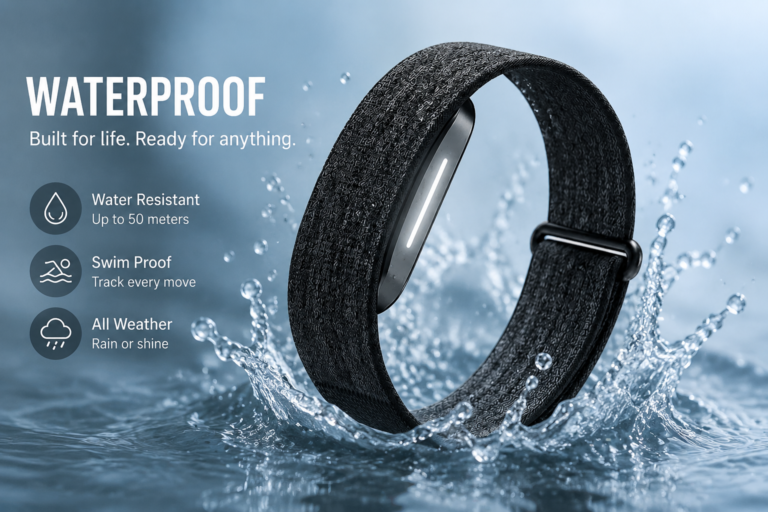
Both devices carry an IP68 rating, but the practical waterproofing isn’t identical.
Whoop 5.0 is rated safe for swimming — pool or open water — down to 10 meters for up to two hours. Its charging PowerPack is also water-resistant, which matters if you tend to charge on the go.
Hume Band 2.0 is rated for showers, dishwashing, and shallow pool swimming, resistant to water at depths up to 1 meter for up to two hours. It’s not built for deep or open-water swimming, so if that’s part of your routine, Whoop has the edge here.
Final Verdict: Which One Should You Buy in 2026?
Choose the Hume Band 2.0 if: your priority is preventive health, metabolic tracking, and longevity; you want blood pressure trend data without paying extra for it; and you’d rather own your device outright than commit to a subscription just to see your own numbers.
Choose the Whoop 5.0 if: you’re training seriously and want the most mature coaching ecosystem on the market; you value the flexibility to wear it on your wrist, arm, or in apparel; and you don’t mind an ongoing membership in exchange for deeper performance features, including ECG on the Life plan.
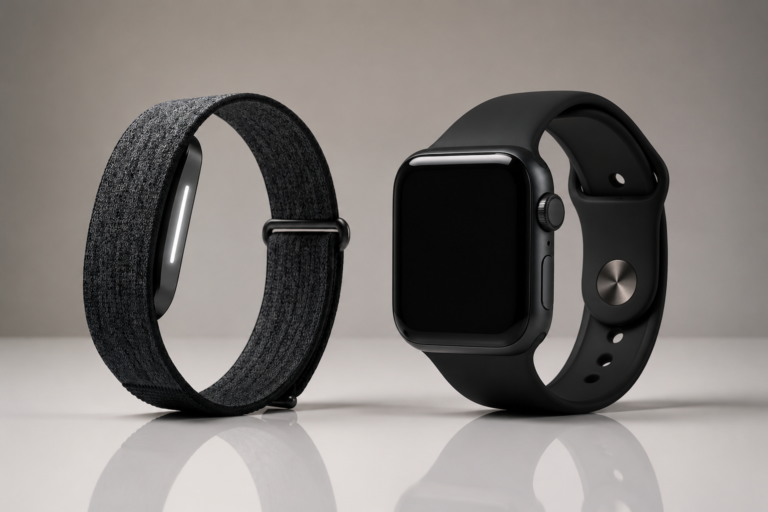
Neither device is trying to be a smartwatch, and neither will notify you of a text message. What they’re really offering are two different lenses on the same body — one focused on how hard you can push today, the other on how well you’ll be doing ten years from now.
FAQ: Hume Band 2.0 vs Whoop 5.0
1. Does the Hume Band 2.0 track daily steps?
Yes, the Hume Band 2.0 features a high-precision 3-axis accelerometer that tracks your daily steps and overall physical movement accurately. Unlike the Whoop 5.0, which completely ignores step counting to focus solely on cardiovascular strain, the Hume Health ecosystem uses your daily step data as a core pillar to calculate your daily Metabolic Momentum and evaluate your biological age trends.
2. Is the Hume Band 2.0 waterproof for swimming?
Yes, the Hume Band 2.0 is waterproof with an official IP68 rating, making it completely safe for heavy sweat, hot showers, and shallow pool swimming. However, while it handles daily water exposure easily, it is not designed for deep scuba diving or high-velocity water sports. If you need a tracker for deep-sea diving, the Whoop 5.0 is rated for depths up to 10 meters.
3. Do you have to pay a monthly subscription for the Hume Band 2.0?
No, the Hume Band 2.0 does not require a mandatory monthly subscription to access your raw health data. After your initial $249 hardware purchase, your baseline metrics—such as sleep stages, heart rate variability (HRV), skin temperature, and steps—are free forever. There is an optional Premium AI tier for $8.99/month for advanced longevity coaching, but the device functions perfectly without it.
4. What is the main difference between Hume Band 2.0 and Whoop 5.0?
The main difference is their ultimate goal: Whoop 5.0 tracks athletic performance and training strain, while Hume Band 2.0 tracks metabolic wellness and biological longevity. Whoop 5.0 is engineered for athletes who want to optimize gym workouts and cardiovascular load. The Hume Band 2.0 is a screenless companion built for individuals who want to track cellular health, reverse their biological age, and monitor metabolic capacity.
5. Can I get a discount code for the Hume Band 2.0?
Yes, you can frequently find active Hume Band discount codes offering 10% to 15% off by checking official referral links.