Hume Band Accuracy: What the Sensors Can (and Can’t) Really Tell You
Accuracy is the question that matters most for a device built around health and longevity claims. Before you rely on the Hume Band’s numbers to make decisions about your training, sleep, or health, it’s worth understanding exactly what’s being measured, how it’s validated, and where the real limitations sit.
📖 Still deciding? Check out our full Hume Band review and pros and cons breakdown, or see our current discount guide if you’re ready to buy.
The Hardware Behind the Numbers
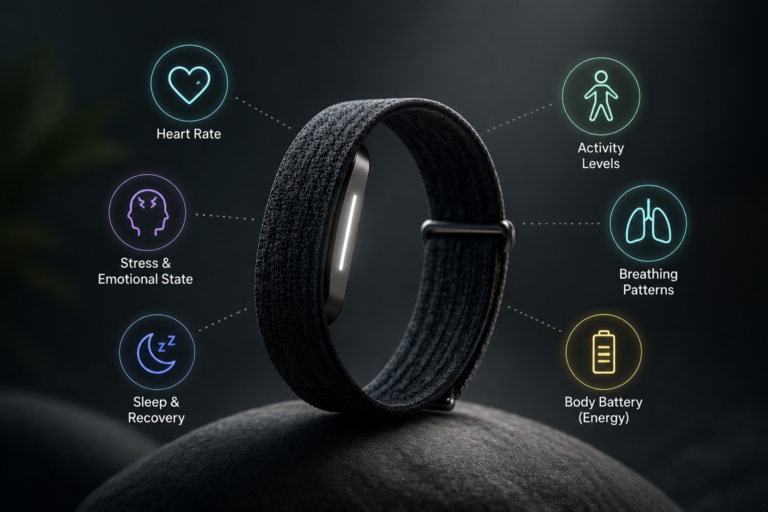
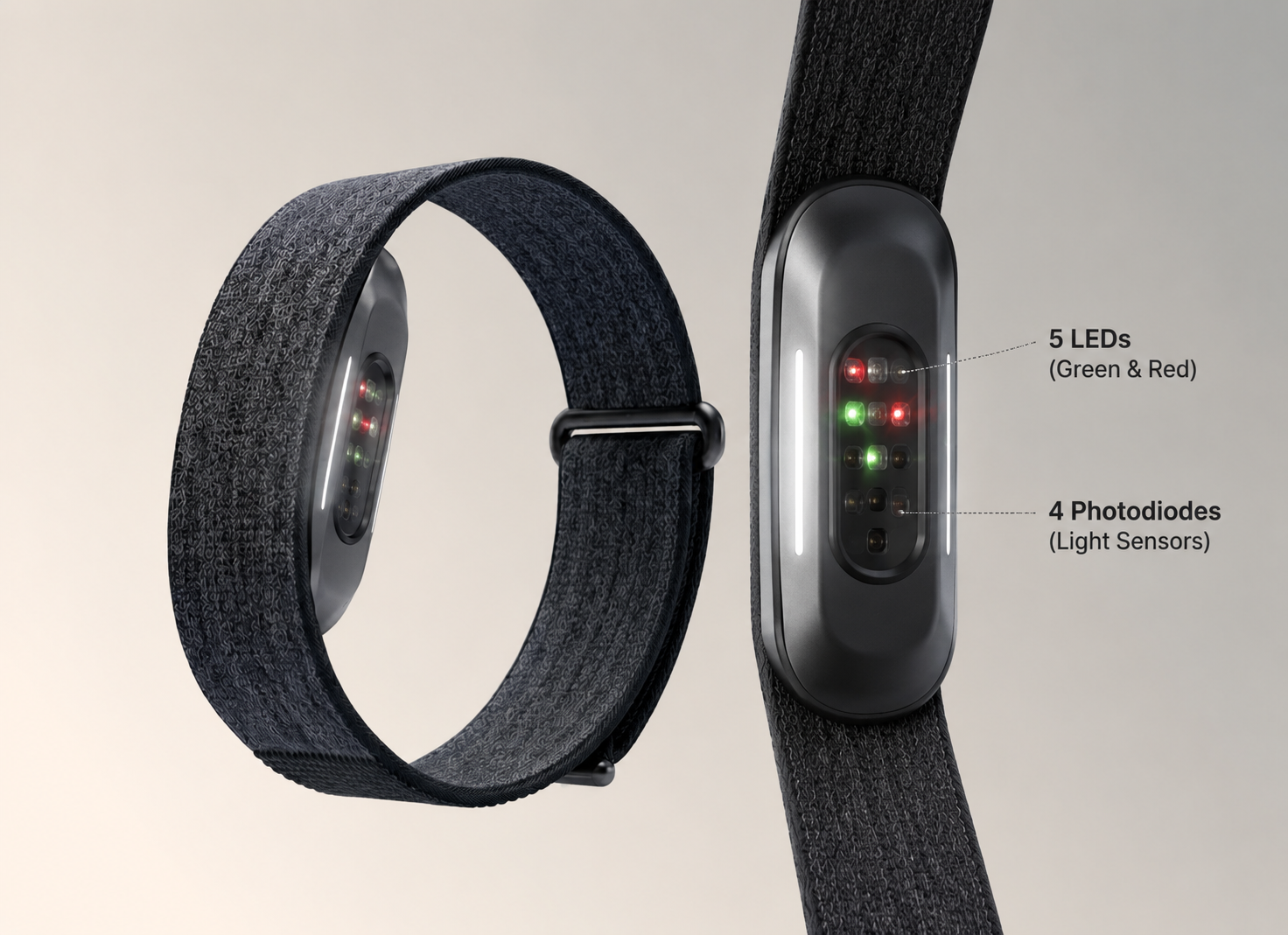
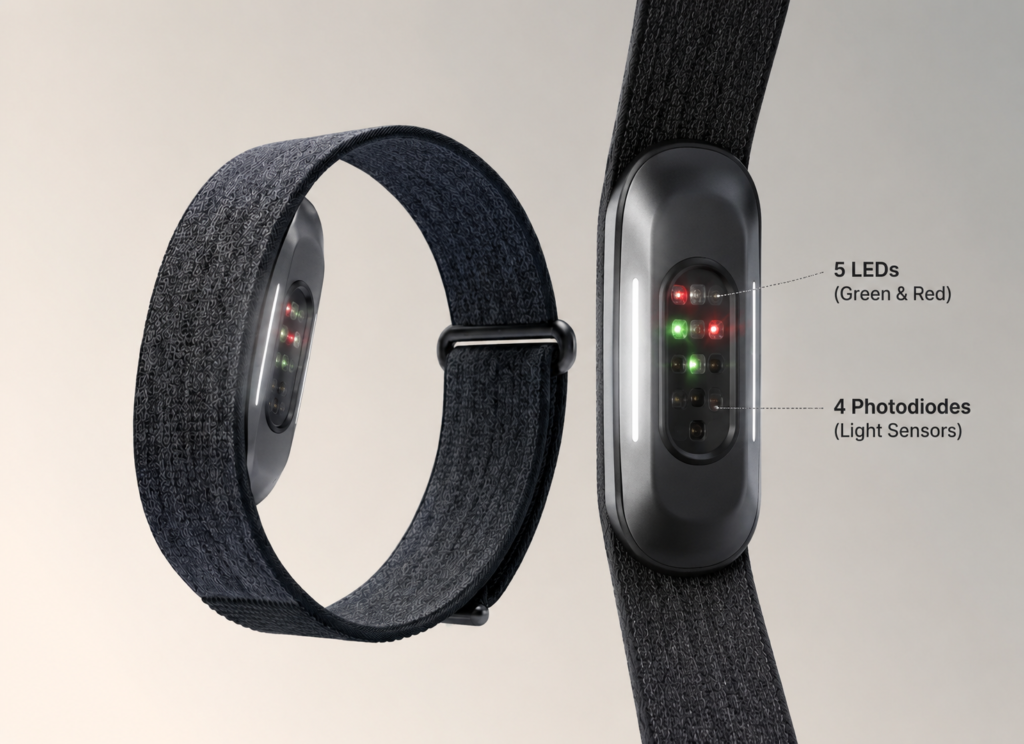
The Hume Band uses a photoplethysmography (PPG) sensor array — the same underlying light-based technology found in the Apple Watch and Oura Ring. Its array combines 5 LEDs and 4 photodiodes, a denser configuration than many competing wearables, which is intended to sample physiological signals more frequently and reduce optical noise. This hardware captures:
- Continuous heart rate and HRV
- Blood oxygen (SpO2)
- Skin temperature
- Sleep stages
- Blood pressure trends
- Activity and movement patterns
Hume Health states that this sensor configuration has been validated through lab studies and third-party testing. From those raw sensor readings, the app generates proprietary composite scores — Metabolic Momentum, Metabolic Capacity, biological age, and an overall Health Score — through its own internal algorithms.
What’s Well-Supported vs. What’s Still Unproven
It’s worth separating the individual sensor readings from the composite scores the app builds on top of them, since they don’t carry the same level of independent validation.
Reasonably well-supported by outside research: PPG-based wearables generally show strong agreement with clinical ECG measurements for resting heart rate and HRV, especially in stationary conditions like sleep — a pattern that shows up consistently across independent wearable research, not just Hume Health’s own claims. Heart rate accuracy for PPG devices broadly tends to land within a few beats per minute of hospital-grade monitors.
More limited or unproven:
- SpO2 estimation is a known weak point for optical sensors across the entire wearable category, with reduced reliability reported in users with darker skin tones — this is an industry-wide limitation, not specific to Hume Health.
- Cuffless blood pressure tracking is best treated as a trend indicator rather than a clinical-grade reading; it’s not a substitute for an actual blood pressure cuff.
- Proprietary composite scores like biological age and Metabolic Momentum are Hume Health’s own algorithms, not standardized clinical measurements. While the underlying inputs (HRV, sleep, activity) do correlate with general health outcomes in broader research, there isn’t independent, peer-reviewed evidence confirming that these specific composite scores predict individual aging rate or lifespan.
What Affects Accuracy in Real-World Use
Even well-designed sensors are affected by conditions outside the device itself. The main variables to know:
- Fit — a loose band reduces skin contact and increases motion artifact in the readings
- Skin tone — a documented, category-wide limitation of PPG technology, particularly for SpO2 accuracy
- Movement — accuracy is generally highest during rest or sleep and lower during high-intensity activity
- Calibration period — new users typically need a first week of consistent wear (especially overnight) before baseline metrics like resting heart rate stabilize
How This Compares to Other Wearables
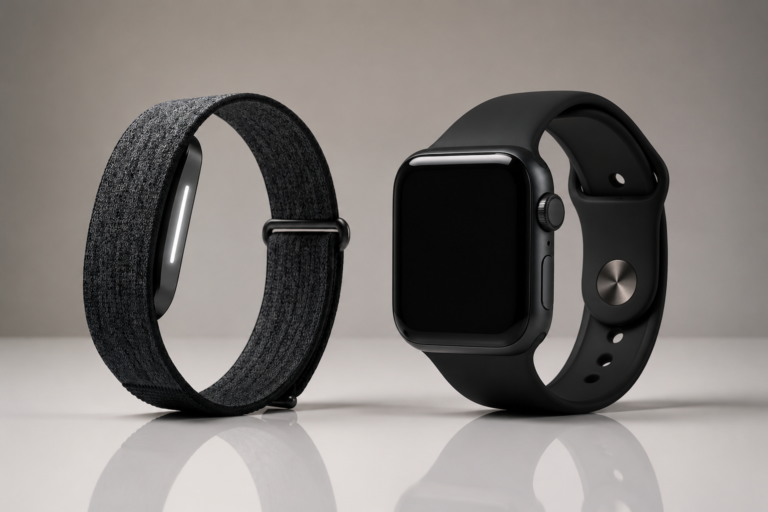
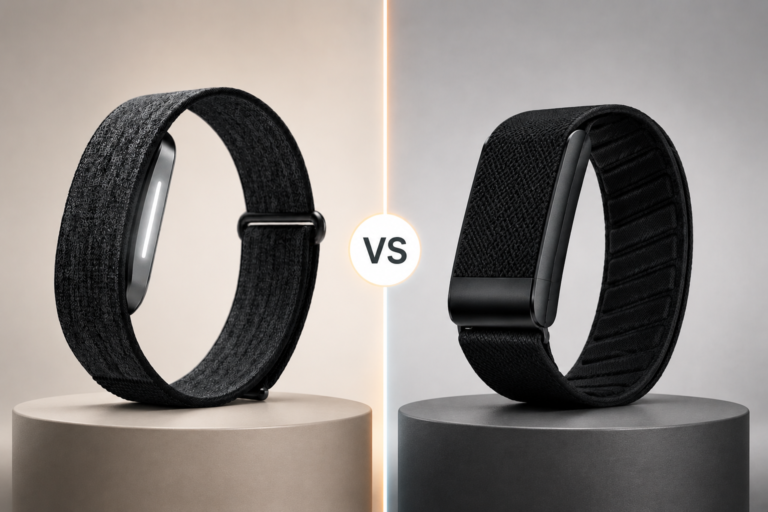
This isn’t a Hume Band–specific issue — it’s a pattern across the entire PPG-based wearable category, including Whoop, Oura, and Apple Watch. None of them are cleared as medical diagnostic devices, and all of them share the same fundamental accuracy trade-offs tied to optical sensing. Where Hume Band’s marketing goes further than some competitors is in framing composite scores around illness detection and lifespan — claims worth treating with a bit more skepticism than the raw biometric readings underneath them.
Bottom Line on Accuracy
The Hume Band’s core biometric sensors are built on the same validated PPG technology used across the premium wearable category, and its denser sensor array is a genuine hardware advantage for data sampling frequency. Where you should apply more caution is with the proprietary scores layered on top — biological age, Metabolic Momentum, and similar metrics are useful as personal trend indicators over time, not as clinically validated numbers. Treat any concerning pattern the app flags as a reason to check in with a healthcare provider, not as a standalone diagnosis.
Frequently Asked Questions
Is the Hume Band accurate? Its core sensors (heart rate, HRV, sleep) use PPG technology that generally shows strong agreement with clinical devices during rest and sleep. Its proprietary scores, like biological age and Metabolic Momentum, are not independently validated clinical measurements and should be treated as trend indicators.
How accurate is the Hume Band’s blood pressure tracking? Cuffless blood pressure tracking on the Hume Band, like on other optical wearables, is best used as a trend indicator rather than a replacement for an actual blood pressure cuff.
Does skin tone affect Hume Band accuracy? Yes. Reduced accuracy in users with darker skin tones is a documented limitation of PPG-based optical sensors industry-wide, and SpO2 readings in particular can be affected.
Is the Hume Band’s biological age score clinically validated? No. Biological age is a proprietary score Hume Health calculates from sensor data using its own algorithm. It isn’t a standardized clinical measurement, and there’s no independent peer-reviewed evidence confirming it predicts individual aging rate or lifespan.
Is the Hume Band as accurate as a hospital monitor? No wrist-worn optical wearable, including the Hume Band, is considered equivalent to hospital-grade equipment. PPG sensors generally track within a few beats per minute of clinical devices for heart rate, but they aren’t a diagnostic substitute.
Do I need to wear the Hume Band a certain way for accurate readings? Yes. A snug (not tight) fit improves skin contact and reduces motion artifacts. Most users also need about a week of consistent wear, especially overnight, before baseline metrics stabilize.
This article is for informational purposes only and does not constitute medical advice. Always consult a healthcare provider regarding any health concerns.