Is Hume Band Worth It? Pros, Cons & Honest Verdict (2026)
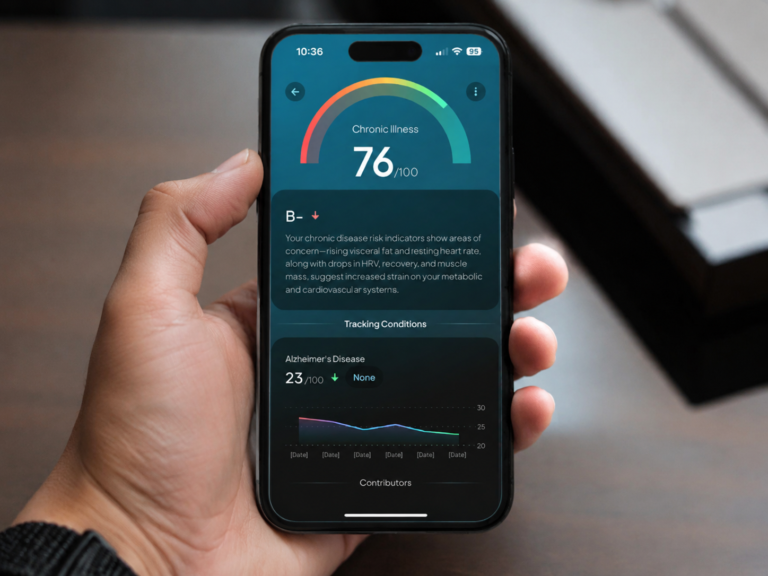
The Hume Band positions itself differently from most wearables on the market — instead of focusing on steps and workouts, it’s built around biological age, metabolic momentum, and early illness detection. That’s a compelling pitch, but it also means it’s competing against a very different set of expectations than a Fitbit or an Apple Watch. Here’s a straightforward breakdown of what you’re actually getting, so you can decide if it fits your routine and budget.
📖 New to the Hume Band? Read our full Hume Band review for hands-on details on setup, battery life, and daily use. If you’re just looking for the best price, check our Hume Band discount guide.
What the Hume Band Actually Tracks
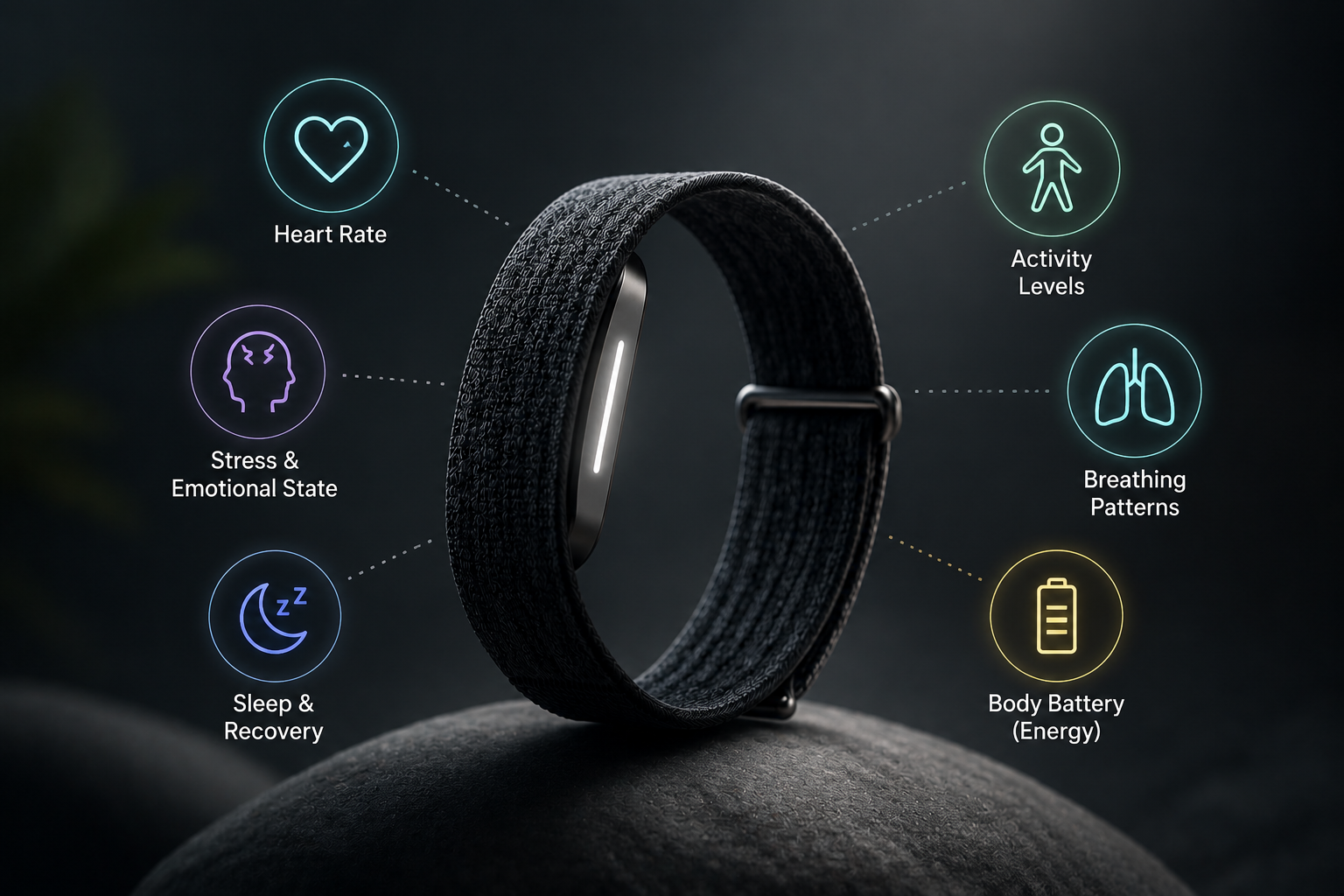
Unlike basic fitness trackers, the Hume Band centers its value proposition around longevity and health-risk metrics rather than workout stats:
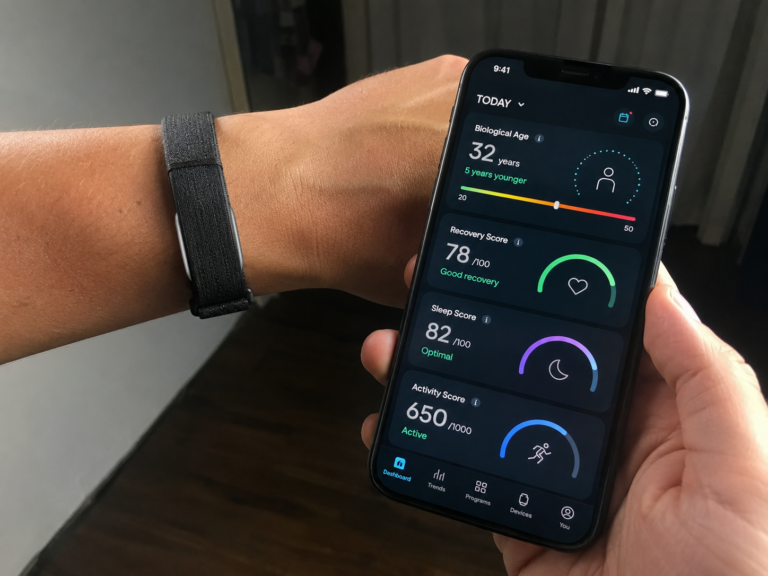
- Biological age estimation — a composite score meant to reflect how your body is aging relative to your calendar age
- Metabolic momentum — Hume Health’s proprietary metric describing how your daily habits are trending over time
- Heart rate variability (HRV) and recovery tracking
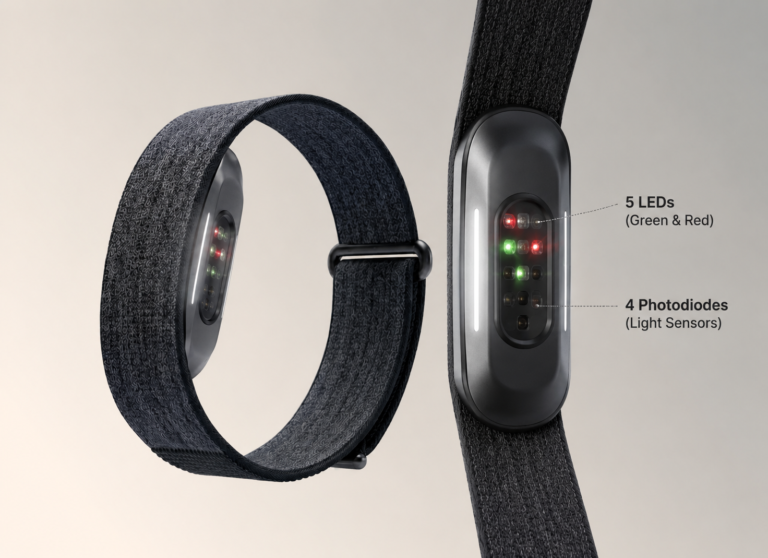
- Sleep staging (light, deep, REM, awake) plus skin temperature and blood oxygen monitoring
- Blood pressure trend tracking
- 24/7 wear with reported battery life of up to 14 days per charge
Core metrics are available without a subscription. An optional Hume Premium tier (roughly $9/month) adds AI-driven coaching and deeper longevity analysis on top of the free data.
Pros
No subscription required for core features This is the Hume Band’s strongest differentiator against Whoop, which requires an ongoing monthly fee just to keep using the device at all. With the Hume Band, you own the hardware and your data outright — the subscription only unlocks extra coaching, not basic functionality.
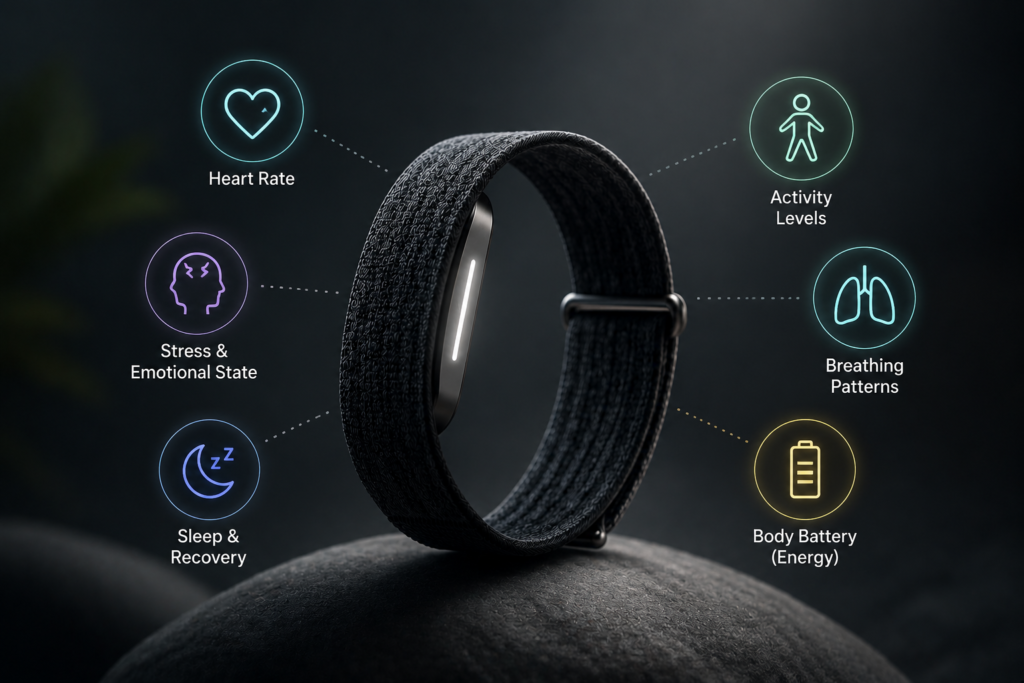
Longevity-focused metrics you won’t find on standard trackers Biological age and metabolic momentum aren’t things Fitbit, Garmin, or a standard Apple Watch report on. If you’re specifically interested in healthspan rather than just fitness stats, this is a meaningful point of difference.
Long battery life Up to 14 days per charge means significantly less charging friction than devices that need daily or every-other-day top-ups.
Generous trial window A 45-day return policy gives you real time to test whether the insights are actually useful to your routine before committing.
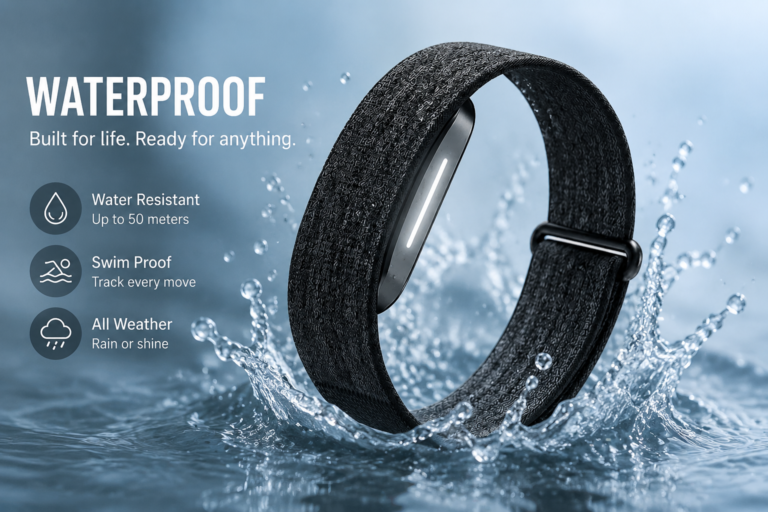
Comfortable for continuous wear Designed to be worn 24/7, including in the shower and during workouts (IP68-rated water resistance), which matters for a device that depends on round-the-clock data to be useful.
Cons
Proprietary metrics aren’t independently validated “Biological age” and “metabolic momentum” are Hume Health’s own scoring systems. They’re not standardized medical measurements, and the underlying methodology isn’t published the way a peer-reviewed clinical tool would be. Treat these as directional wellness indicators, not diagnostic results.
Not a medical device Despite marketing language around “early illness detection,” the Hume Band isn’t FDA-cleared as a diagnostic tool. It’s a consumer wellness wearable, and any concerning trend it flags should be followed up with an actual healthcare provider, not treated as a diagnosis.
Direct-to-consumer only The Hume Band isn’t sold through Amazon or major retailers, so you can’t compare third-party reviews on a familiar marketplace, and returns/support go entirely through Hume Health directly rather than a retailer’s return process.
Premium tier costs add up over time While core tracking is subscription-free, anyone who wants the full AI-coaching experience will eventually be paying a recurring fee — narrowing the total cost-of-ownership gap with subscription competitors like Whoop over a multi-year horizon.
Marketing language runs ahead of independent verification Claims like “5.2 extra years of healthy lifespan” appear in the brand’s own marketing rather than independent clinical studies. Worth treating as a promotional claim rather than a proven outcome.
Who the Hume Band Is Actually a Good Fit For
- Someone who wants ongoing health/recovery tracking without committing to a monthly subscription just to use the hardware
- People more interested in long-term healthspan trends than workout-specific metrics (pace, splits, VO2 max detail)
- Anyone who’s tried subscription wearables like Whoop and specifically wants out of that billing model
Who Should Probably Look Elsewhere
- Athletes who need detailed sport-specific training metrics — Whoop and Garmin are still stronger here
- Anyone expecting medical-grade diagnostic accuracy — this is a wellness device, not a clinical one
- Buyers who want the option to compare reviews and pricing across multiple retailers before purchasing
Frequently Asked Questions
Is the Hume Band worth buying? For most people, yes — if you want ongoing health and recovery tracking without a mandatory monthly subscription. The Hume Band’s core metrics (biological age, HRV, sleep, recovery) work without a paid plan, which sets it apart from subscription-based competitors like Whoop.
What are the main pros of the Hume Band? The biggest advantages are no required subscription for core features, up to 14 days of battery life per charge, longevity-focused metrics not found on standard fitness trackers, and a 45-day return window to test it risk-free.
What are the main cons of the Hume Band? The Hume Band’s proprietary metrics like “biological age” and “metabolic momentum” aren’t independently validated medical measurements, it isn’t FDA-cleared as a diagnostic device, and it’s only sold direct-to-consumer rather than through major retailers.
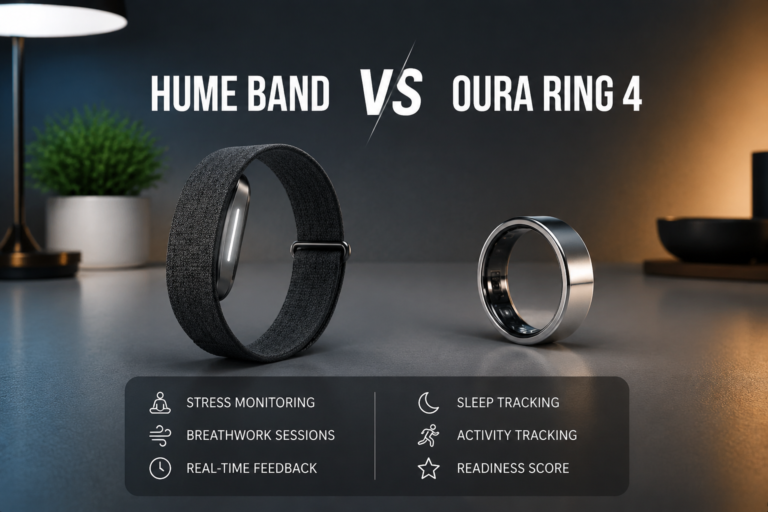
Is the Hume Band better than Whoop? It depends on priorities. The Hume Band doesn’t require a subscription to use core tracking features, which makes it cheaper long-term for casual users. Whoop offers more sport-specific training metrics, which may matter more for serious athletes.
Is the Hume Band a medical device? No. It’s a consumer wellness wearable, not an FDA-cleared diagnostic device. Any health trend it flags should be discussed with a healthcare provider rather than treated as a diagnosis.
Do you need a subscription to use the Hume Band? No. Core features like biological age, sleep staging, HRV, and recovery tracking work without a subscription. An optional Hume Premium plan (around $9/month) adds AI coaching and deeper longevity analysis on top of the free features.
How long does the Hume Band battery last? Up to 14 days per charge, according to Hume Health, which is longer than most wearables that require daily or near-daily charging.
Can I return the Hume Band if I don’t like it? Yes. Hume Health offers a 45-day trial period, giving buyers a reasonable window to test the device before deciding whether to keep it.
The Verdict
The Hume Band earns its “worth it” case primarily through its business model, not just its sensors: getting real health-tracking value without a mandatory subscription is genuinely rare in this category. If the longevity-focused metrics (biological age, metabolic momentum) appeal to you and you go in understanding they’re proprietary wellness scores rather than clinical measurements, the 45-day trial makes it a low-risk way to find out if it earns a permanent spot on your wrist. If your priority is sport-specific training data or FDA-level diagnostic accuracy, it’s worth comparing against Whoop or Garmin before deciding.
This article is for informational purposes only and does not constitute medical advice. Always consult a healthcare provider regarding any health concerns.