Hume Band vs Garmin: Which Wearable Fits Your Goals in 2026?
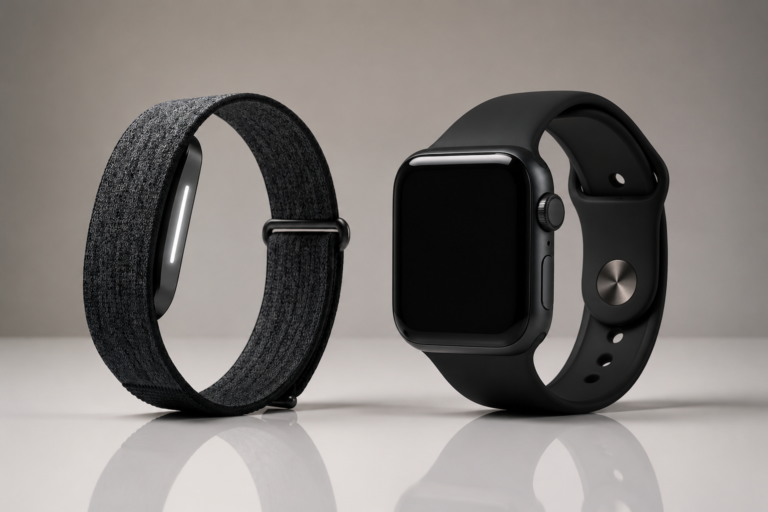
The Hume Band and Garmin’s wearables come from almost opposite starting points. The Hume Band is a single, purpose-built device focused on longevity and metabolic health. Garmin is an entire ecosystem of GPS smartwatches — Forerunner, Venu, Fenix, and more — built primarily around athletic performance. Comparing them isn’t really “which device is better,” it’s “which category of wearable actually matches what you’re trying to track.”
📖 Curious how the Hume Band stacks up elsewhere? See our Hume Band vs Oura Ring 4 comparison, our pros and cons breakdown, or the full review.
Quick Comparison
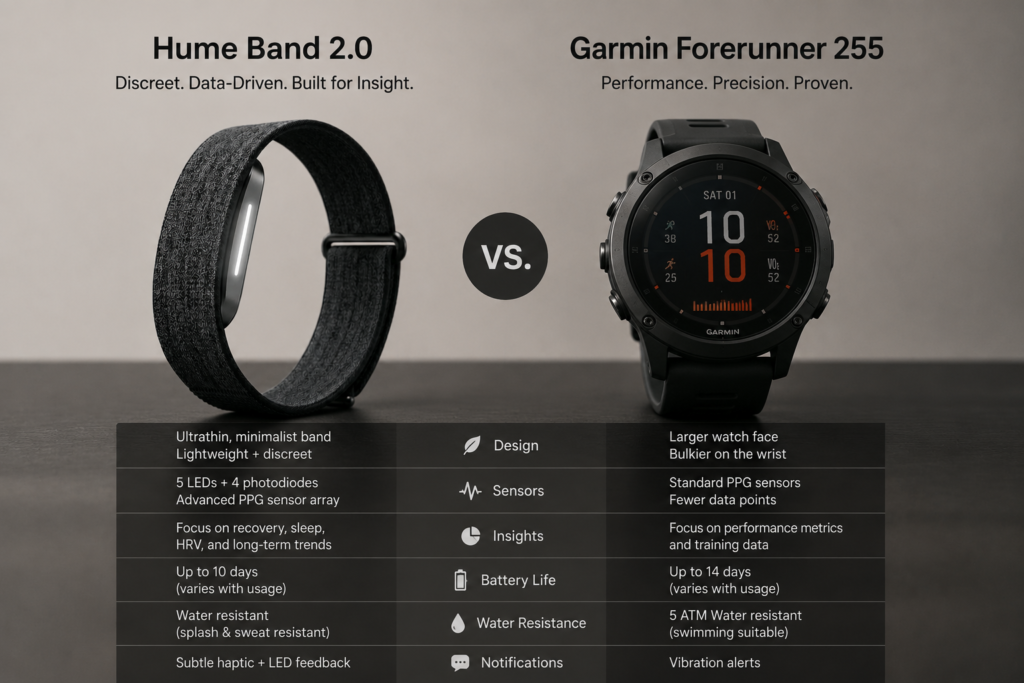
| Feature | Hume Band | Garmin (typical mid-range model) |
|---|---|---|
| Form factor | Screen-free wrist band | Full GPS smartwatch with display |
| Upfront price | ~$250–295 | ~$150–$800+ depending on model |
| Subscription | Optional (~$9/mo for AI coaching); core features free | Optional Garmin Connect+ (~$7/mo or $70/yr for AI training insights); core app free |
| Battery life | Up to 14 days | Days to weeks, varies significantly by model and GPS use |
| Core focus | Longevity, metabolic health, biological age | Athletic performance, GPS tracking, sport-specific training |
| Signature feature | Metabolic Momentum, Chronic Illness Detection claims | Training Readiness, sport profiles, on-device GPS mapping |
Different Products, Different Missions
This comparison matters most for people trying to decide which category fits their goals, since these two products aren’t really built for the same buyer.
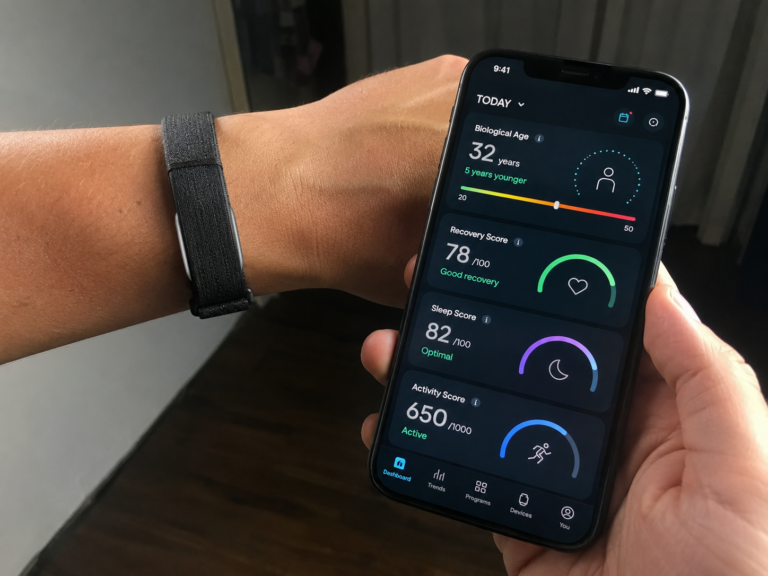
The Hume Band is a single, focused device. No screen, no notifications, no sport modes — just continuous biometric sensing feeding into longevity-oriented metrics like Metabolic Capacity and biological age.
Garmin spans dozens of models across very different price points and purposes — from the budget-friendly Forerunner line for runners, to the Venu series for everyday fitness and wellness, up to the premium Fenix and Epix lines built for multi-sport athletes and outdoor use. Nearly all of them include a full display, GPS, sport-specific training profiles, and (on many models) music, payments, and smartphone notifications.
Subscriptions: Both Are Now Optional, But Different in Scope
For most of its history, Garmin’s core app (Garmin Connect) has been free with no required subscription — a longstanding advantage over subscription-first competitors. In 2025, Garmin introduced Connect+, an optional tier (around $7/month or $70/year) that adds AI-powered training recommendations and deeper coaching on top of the free experience. Regular training metrics, recovery data, and sport tracking remain available without it.
The Hume Band follows a similar structure: core metrics are free, and an optional ~$9/month Premium tier adds AI coaching. In practice, both companies now offer a comparable “free core, paid AI layer” model — a shift away from the mandatory-subscription approach used by Whoop and Oura.
Sport Tracking vs. Longevity Tracking
This is where the real decision usually comes down to fit:
Garmin’s strength is sport-specific precision — dedicated GPS tracking for running, cycling, swimming, hiking, and dozens of other activity profiles, plus features like on-device mapping and training load analysis built specifically for structured athletic training.
The Hume Band’s strength is continuous, longitudinal health tracking that isn’t tied to workouts at all — Metabolic Momentum and biological age are meant to reflect trends in daily habits and recovery over weeks and months, not performance in a single session.
If your main goal is training for a race or optimizing workouts, Garmin’s sport-specific tools go considerably deeper. If your main goal is understanding how your daily lifestyle is trending over time, the Hume Band’s continuous, screen-free approach is more purpose-built for that.
Design and Everyday Wear
Garmin watches are, first and foremost, watches — most models include a display, and higher-end lines add smartwatch features like contactless payments and music storage. That makes them more functional as an all-day device beyond health tracking, but also means more to charge and more surface area on the wrist.
The Hume Band’s screen-free design is lower-profile and less distracting by design, trading notifications and sport-mode displays for longer battery life (up to 14 days) and a narrower, more singular focus.
Who Each Device Fits Best
Choose the Hume Band if:
- You want longevity and metabolic health tracking without needing sport-specific GPS features
- You’d rather not wear (or charge) a full smartwatch display
- Long battery life and a no-subscription core experience matter to you
Choose a Garmin if:
- You train for specific sports and want dedicated GPS, pace, and performance metrics
- You want smartwatch features (notifications, payments, music) alongside health tracking
- You’re comparing options across a wide range of price points, from entry-level to premium multi-sport watches
The Verdict
This isn’t really an apples-to-apples comparison — it’s closer to choosing between a dedicated longevity tracker and an entire category of GPS sports watches. Athletes and structured trainers will likely find Garmin’s sport-specific depth hard to replace. Anyone whose main interest is metabolic and longevity trends, without needing GPS or workout-specific data, will find the Hume Band’s screen-free, single-purpose design a better match — and both now offer their advanced AI features as optional add-ons rather than mandatory subscriptions.
Frequently Asked Questions
Is the Hume Band better than Garmin? It depends on your goal. The Hume Band focuses on longevity and metabolic health without needing a screen or GPS, while Garmin devices are built primarily for sport-specific training with dedicated GPS and performance metrics. They serve different use cases more than they compete head-to-head.
Do Garmin watches require a subscription? No, not for core features. Garmin Connect, the main app, is free. An optional Connect+ subscription (around $7/month or $70/year), introduced in 2025, adds AI-powered training recommendations on top of the free experience.
Does the Hume Band require a subscription? No. Core metrics like HRV, sleep staging, recovery, and Metabolic Capacity are available without a subscription. An optional ~$9/month Premium tier adds AI coaching.
Which has a longer battery life, Hume Band or Garmin? The Hume Band lasts up to 14 days per charge. Garmin battery life varies significantly by model, from a few days on AMOLED smartwatches with heavy GPS use to multiple weeks on some battery-focused models.
Does the Hume Band have GPS like Garmin? No. The Hume Band is a screen-free health and longevity tracker without built-in GPS or sport-specific training profiles, which are core features across most Garmin devices.
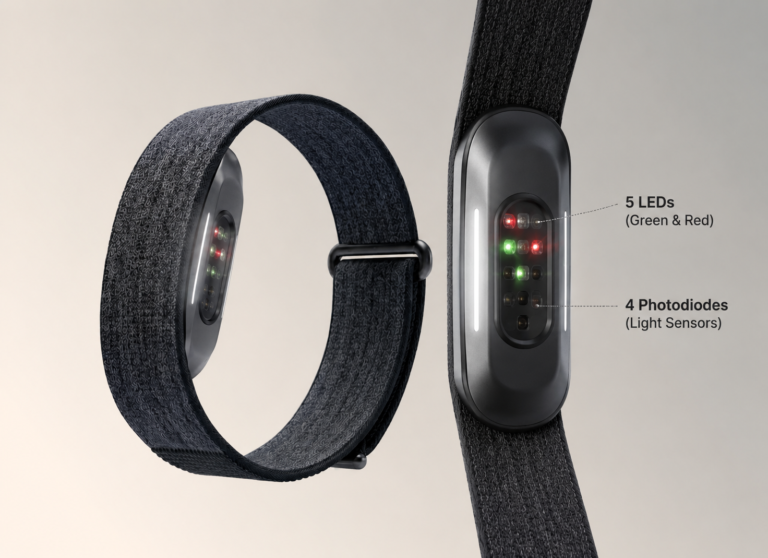
Is Garmin or Hume Band more accurate for health tracking? Both use similar underlying sensor technology (PPG-based heart rate and HRV tracking), sharing the same category-wide limitations around fit, skin tone, and movement. Garmin’s strength is sport and GPS-based metrics; the Hume Band’s focus is longevity-oriented composite scores. Neither is a certified medical diagnostic device.
This article is for informational purposes only and does not constitute medical advice. Always consult a healthcare provider regarding any health concerns.