Hume Band vs Oura Ring 4: Which Health Wearable Is Worth It in 2026?
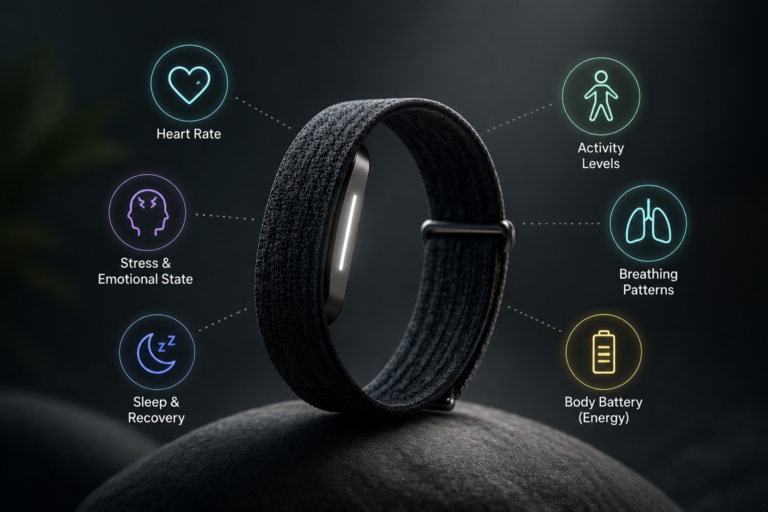
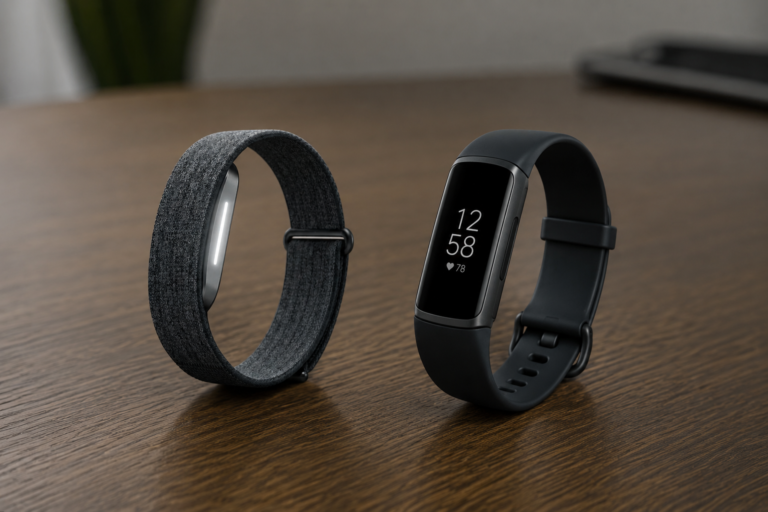
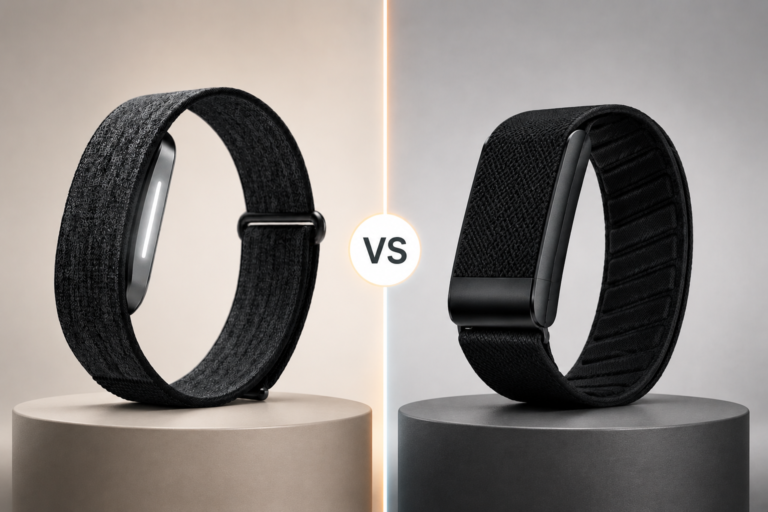
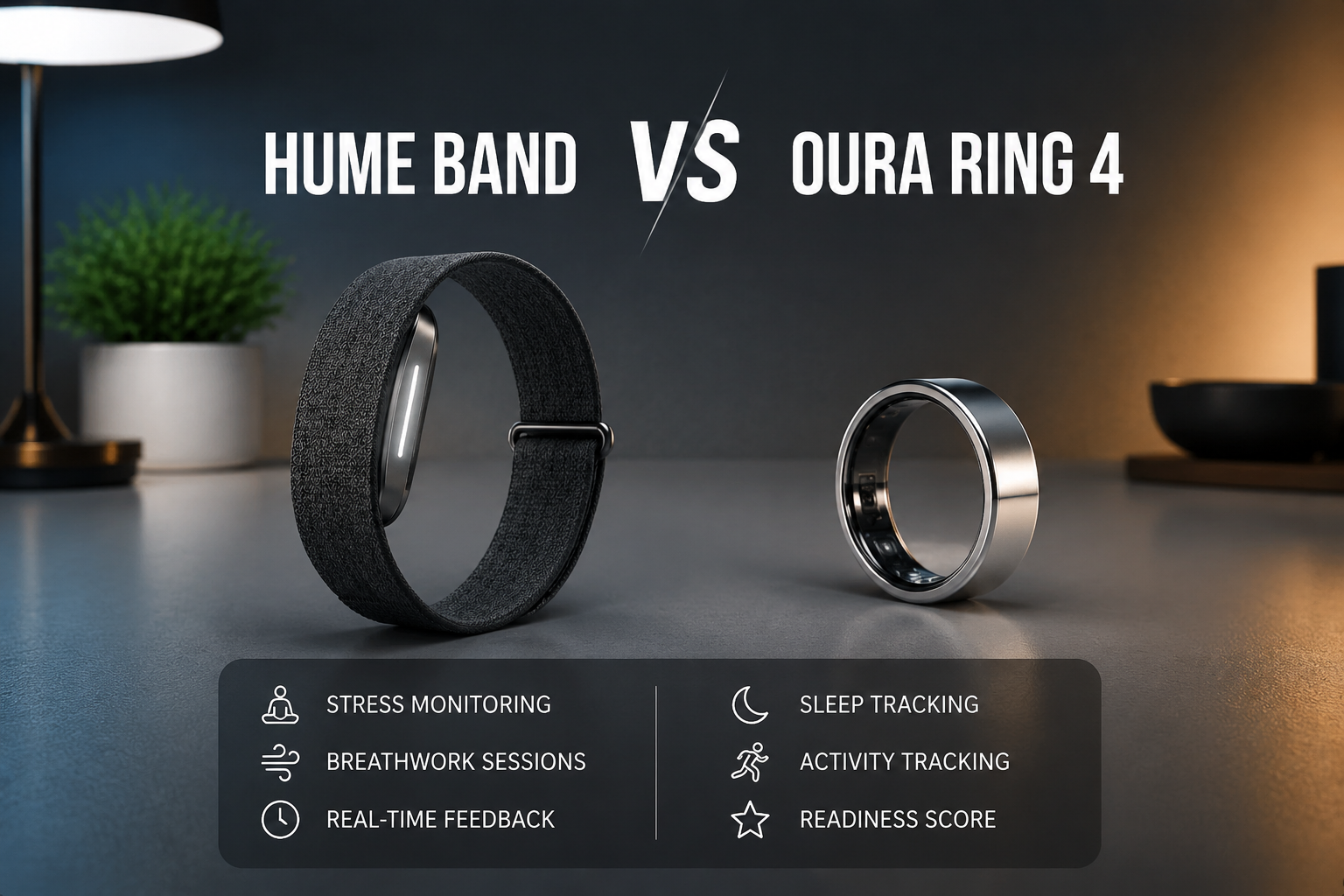
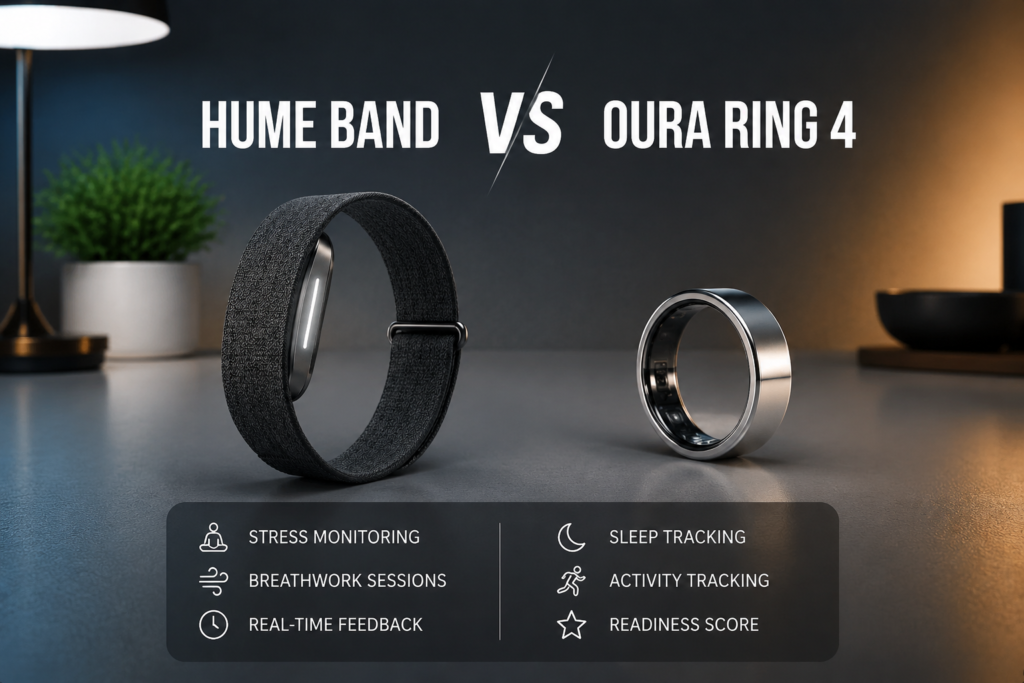
Both the Hume Band and the Oura Ring 4 sit in the same general category — screen-free wearables built around longevity and daily wellness rather than workout stats. But they take genuinely different approaches to form factor, pricing, and how much of their insight sits behind a paywall. Here’s how they actually compare.
📖 Want more background first? Check out our full Hume Band review, pros and cons breakdown, or accuracy deep-dive before choosing between the two.
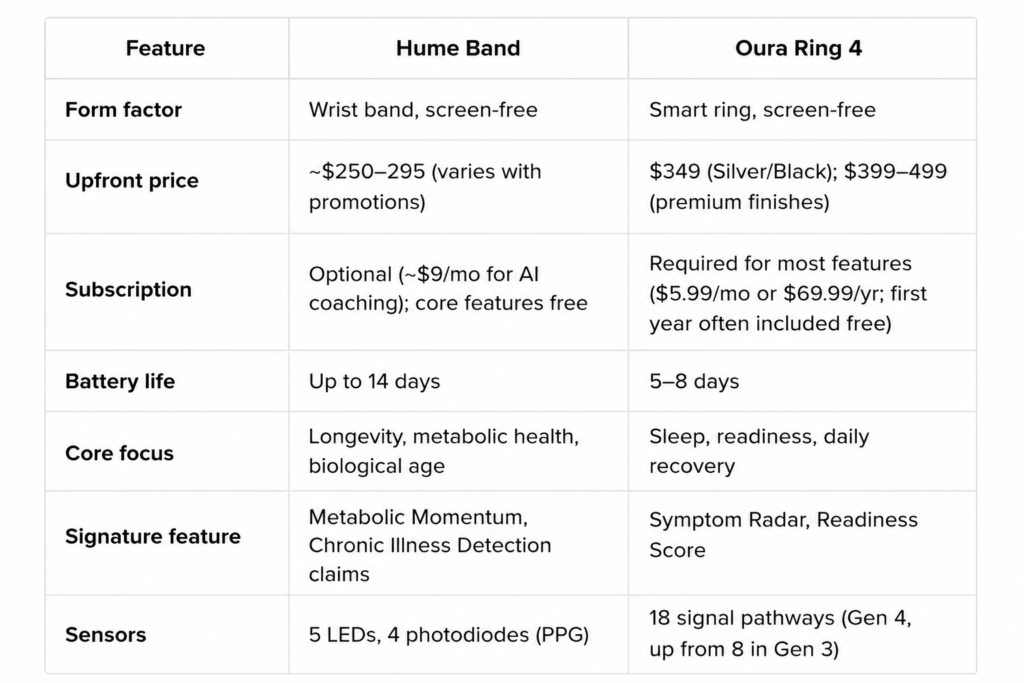
Quick Comparison
| Feature | Hume Band | Oura Ring 4 |
|---|---|---|
| Form factor | Wrist band, screen-free | Smart ring, screen-free |
| Upfront price | ~$250–295 (varies with promotions) | $349 (Silver/Black); $399–499 (premium finishes) |
| Subscription | Optional (~$9/mo for AI coaching); core features free | Required for most features ($5.99/mo or $69.99/yr; first year often included free) |
| Battery life | Up to 14 days | 5–8 days |
| Core focus | Longevity, metabolic health, biological age | Sleep, readiness, daily recovery |
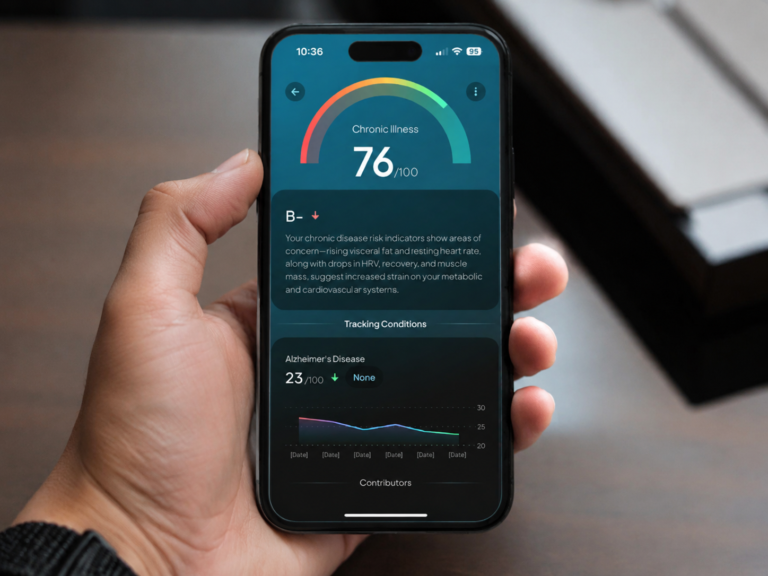
| Signature feature | Metabolic Momentum, Chronic Illness Detection claims | Symptom Radar, Readiness Score |
| Sensors | 5 LEDs, 4 photodiodes (PPG) | 18 signal pathways (Gen 4, up from 8 in Gen 3) |
The Core Difference: Subscription Model
This is the single biggest practical difference between the two devices.
Hume Band gives you full access to core metrics — HRV, sleep staging, recovery, blood pressure trends, and its proprietary Metabolic Capacity score — without any subscription. An optional Premium tier (~$9/month) adds AI coaching on top, but the device is fully functional without it.
Oura Ring 4 takes the opposite approach. Without a membership, the ring functions as a basic tracker showing only daily scores for sleep, activity, and readiness. The $5.99/month (or $69.99/year) membership is required to unlock sleep stage analysis, HRV trends, illness detection, and personalized insights — the features most people actually buy the ring for. New purchases typically include the first 12 months of membership free, but the subscription auto-renews after that.
Over a multi-year timeframe, this adds up: five years of Oura membership on the annual plan runs roughly double the ring’s original hardware cost, while the Hume Band’s core functionality stays free indefinitely.
Design and Comfort
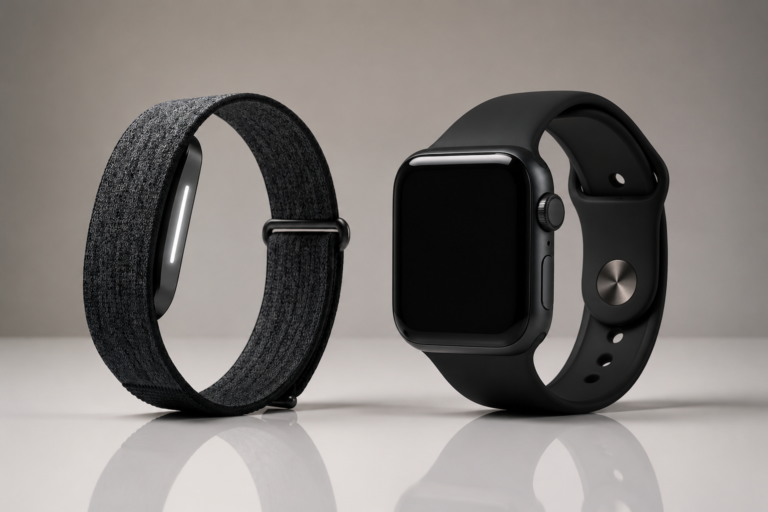
The two devices ask very different things of your body. The Hume Band is a wrist-worn band, while the Oura Ring sits on a finger — a form factor some people find less noticeable for 24/7 wear, though it also means getting the sizing right matters more (Oura sells a separate sizing kit before you commit to a size).
Oura Ring 4’s newer sensor design removed the raised sensor bumps present in earlier generations, making the interior surface flush and more comfortable against the skin. The Hume Band, being a band rather than a ring, doesn’t have sizing risk in the same way but sits more visibly on the wrist than a ring does under a sleeve or on a finger.
Feature Comparison: Illness Detection
Both brands market some form of early-warning capability, though they frame it differently:
- Oura’s Symptom Radar looks for deviations in temperature, respiratory rate, HR/HRV, and sleep patterns that may suggest you’re getting sick.
- Hume Band’s Chronic Illness Detection claims go further, marketing the ability to flag early signs of chronic illness through sleep and biomarker tracking.
Both features should be treated the same way: as wellness signals to watch, not medical diagnoses. Neither device is FDA-cleared as a diagnostic tool, and any concerning pattern either app flags is worth following up with an actual healthcare provider.
Sensor Hardware
Oura Ring 4 increased its signal pathways from 8 (Gen 3) to 18, which the company positions as improving accuracy across different finger positions and skin tones. The Hume Band’s 5-LED, 4-photodiode array is a denser configuration than many wrist wearables, aimed at more frequent sampling and reduced optical noise. Both use PPG (photoplethysmography) technology at their core, so they share the same category-wide accuracy caveats — movement artifacts, fit-dependent readings, and reduced reliability during high-intensity activity.
Who Each Device Fits Best
Choose the Hume Band if:
- You want full-featured tracking without an ongoing subscription commitment
- Longer battery life (up to 14 days) matters to you
- You’re more interested in metabolic/longevity framing than day-to-day readiness scores
Choose the Oura Ring 4 if:
- You prefer a ring form factor over a wrist band
- You’re comfortable with a modest recurring subscription in exchange for a more mature, widely-reviewed platform
- Sleep staging and daily readiness scoring are your primary use case
The Verdict
If avoiding a recurring subscription is a priority, the Hume Band has a clear structural advantage — you get full core functionality without ongoing fees, and the cost gap widens the longer you own the device. If you’d rather wear a ring than a band and don’t mind the modest monthly cost for a more established platform with a longer track record, the Oura Ring 4 remains a strong option. Both make similar longevity and illness-detection claims that are worth treating as wellness indicators rather than clinical diagnoses.
Frequently Asked Questions
Is the Hume Band better than the Oura Ring 4? It depends on priorities. The Hume Band doesn’t require a subscription for core features and has longer battery life, while the Oura Ring 4 offers a ring form factor and a more established platform, at the cost of a required monthly membership for most features.
Do you need a subscription for the Oura Ring 4? Yes, for most features. Without an Oura Membership ($5.99/month or $69.99/year), the ring only shows basic daily scores for sleep, activity, and readiness. Sleep stage analysis, HRV trends, and illness detection require the subscription.
Do you need a subscription for the Hume Band? No. Core metrics — HRV, sleep staging, recovery, and blood pressure trends — are available without a subscription. An optional ~$9/month Premium tier adds AI coaching on top.
Which has better battery life, Hume Band or Oura Ring 4? The Hume Band lasts up to 14 days per charge, compared to 5–8 days for the Oura Ring 4.
Is the Hume Band or Oura Ring 4 more accurate? Both use PPG (photoplethysmography) sensor technology and share the same category-wide limitations — accuracy can be affected by fit, skin tone, and movement. Oura Ring 4 increased its sensor pathways to 18 (from 8 in Gen 3); the Hume Band uses a 5-LED, 4-photodiode array. Neither is a medical diagnostic device.
Which is cheaper over time, Hume Band or Oura Ring 4? The Hume Band is generally cheaper long-term since its core features don’t require a subscription. The Oura Ring 4’s required membership adds up over several years, often totaling roughly double the ring’s original hardware price by year five.
This article is for informational purposes only and does not constitute medical advice. Always consult a healthcare provider regarding any health concerns.